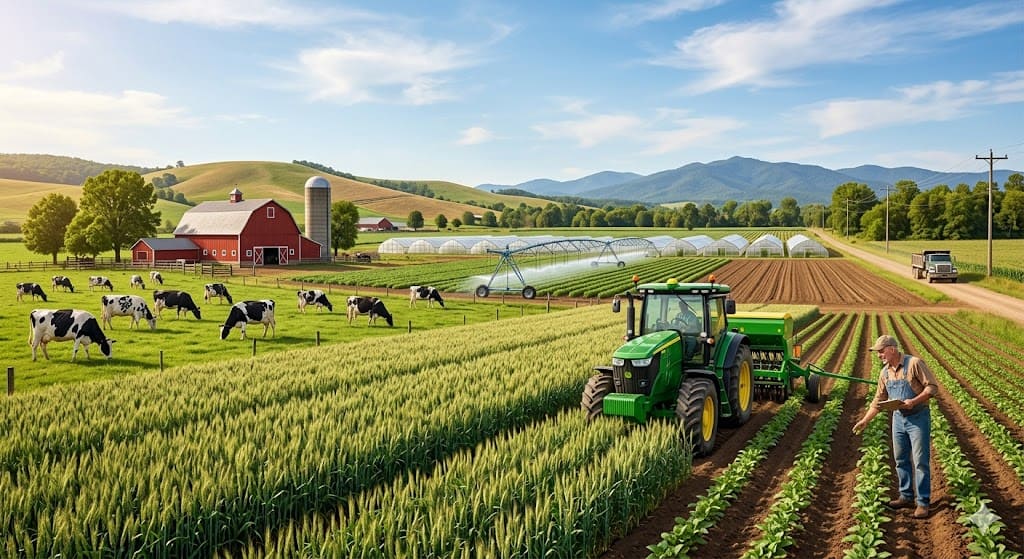
What is a Farming System in Agriculture

Discover everything about farming systems in agriculture: definition, 10 major types including subsistence, commercial, mixed, intensive, agroforestry, and integrated farming. Additionally, learn about importance, advantages, disadvantages, and modern innovations shaping the future of food production.
What Is a Farming System in Agriculture?
A farming system in agriculture is an organized arrangement of crop production, animal farming, land use, and resource management that a farmer or agricultural enterprise uses to produce food, fiber, and other products from the land. However, it is not just about what you grow. Instead, it encompasses how everything on a farm fits together: the crops, the livestock, the soil, the water, the equipment, and the people who manage it all. Therefore, understanding these interconnections is essential for successful farm management.
Understanding the farming system meaning in agriculture is essential for anyone involved in food production. This includes everyone from a small-scale farmer growing vegetables for local markets to a commercial agribusiness managing thousands of hectares of farmland. Furthermore, the concept encompasses the decisions, techniques, and technologies that shape how agriculture is practiced. Consequently, it determines how productively and sustainably land is used. Thus, mastering this concept is the first step toward agricultural excellence.
Farming Systems in Agriculture: A Definition
The farming systems in agriculture definition can be understood at several levels. At its simplest level, a farming system is the combination of farm enterprises — crops, livestock farming, trees, aquaculture — that a farmer manages as an integrated unit. Notably, each component interacts with the others. For example, livestock produce manure that fertilizes crops. Similarly, crops produce residues that feed livestock. In addition, trees provide shade, fix nitrogen, and produce fruit or timber. Consequently, the farm operates as a system precisely because its parts are connected in meaningful ways.
At a broader level, an agricultural farming system includes the social, economic, and environmental context in which farming takes place. This includes land tenure, market access, climate, cultural practices, available farm equipment, agricultural services, and the knowledge and goals of the farming family or enterprise. Therefore, understanding this broader context is crucial for successful farm management. Moreover, ignoring these contextual factors often leads to system failure, regardless of technical excellence.
10 Major Types of Farming Systems in Agriculture
The classification of farming systems in agriculture is based on several criteria. These include scale, input levels, crop and animal types, and the degree of integration between different enterprises. Below are the 10 major types of farming systems with examples and detailed explanations. Furthermore, each system has unique strengths and weaknesses.
Traditional and Small-Scale Farming Systems
1. 🌾 Subsistence Farming System
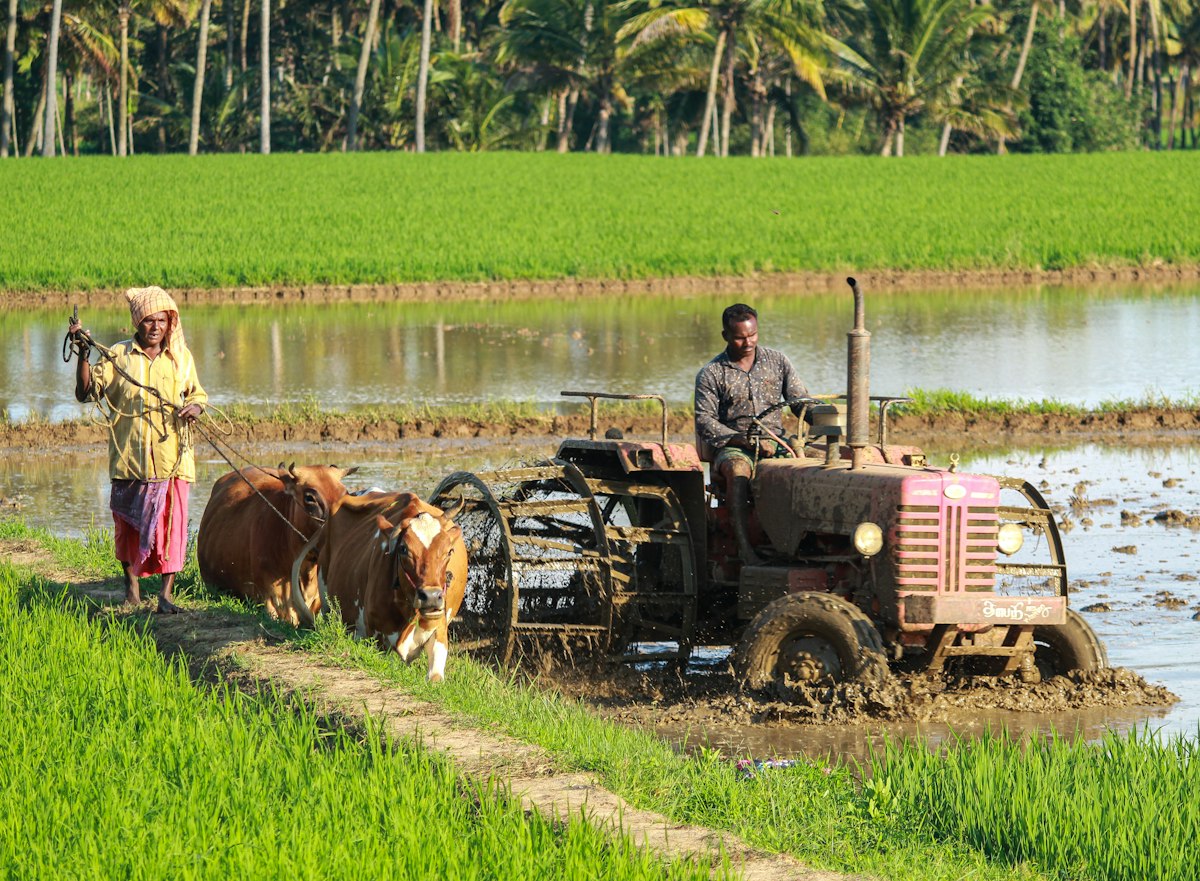
In this system, the primary goal is to produce enough food to feed the farming family. Typically, there is little or no surplus for sale. Key characteristics include small farm size, low external inputs, traditional knowledge, and high family labor intensity. Consequently, this system dominates in parts of Africa, South Asia, and Southeast Asia. However, it often struggles to generate cash income for farmers.
2. 🔥 Shifting Cultivation
As one of the oldest systems, shifting cultivation involves clearing a patch of land, cropping it for a few seasons, and then abandoning it to regenerate while the farmer moves to a new plot. This practice is used by indigenous communities in tropical forests. At low population densities, it remains sustainable. However, under population pressure, fallow periods shorten and soil degradation occurs.
3. 🐫 Nomadic Herding System
Nomadic herding involves moving livestock — cattle, sheep, camels, goats — across seasonal grazing territories. Herders search for water and pasture as seasons change. This system is practiced across arid regions of Africa, Central Asia, and the Middle East. Consequently, it is highly adapted to environments where crop farming is impossible. Nevertheless, climate change increasingly threatens traditional migration routes.
Commercial and Market-Oriented Farming Systems
4. 💰 Commercial Farming System
This approach is organized around producing agricultural commodities for sale in markets. Moreover, it features large-scale farmland, heavy mechanization, precision agriculture technologies, and integration with agribusiness supply chains. As a result, it produces the bulk of traded global commodities. Nevertheless, it carries significant environmental costs that must be managed.
5. ⚡ Intensive Farming System
Intensive farming maximizes output per unit of land or labor. It achieves this through high levels of inputs such as fertilizers, irrigation, pesticides, improved seeds, and mechanization. Thus, it has become the dominant model in the developed world and commercial agriculture. However, it also carries significant environmental costs, including soil degradation and water pollution.
6. 🌴 Plantation Agriculture System
Plantation agriculture involves large-scale, single-crop production of high-value export crops on large estates using hired labor. For example, it produces tea, coffee, rubber, sugarcane, palm oil, and bananas. Therefore, it is commercially oriented and requires significant capital investment. Moreover, plantations often face social and environmental scrutiny regarding labor conditions and land use.
7. 🌍 Extensive Farming System
This system uses large areas of land with relatively low input per hectare. It is common where land is abundant but capital and labor are scarce, such as in Australia, Argentina, Canada, and the American Great Plains. Consequently, it produces lower yields per hectare but also lower production costs. Therefore, it remains profitable in low-density regions.
Integrated and Sustainable Farming Systems
8. 🐄🐔 Mixed Farming System
This system combines crop production and livestock farming on the same farm. Importantly, each enterprise supports the other. For instance, livestock manure fertilizes crops, while crop residues feed animals. Due to these synergies, mixed farming is common across South Asia, Europe, and Africa. In addition, it is highly efficient and resilient to market fluctuations.
9. 🌳 Agroforestry Systems
Agroforestry integrates trees, crops, and sometimes livestock on the same land. Trees provide shade, fix nitrogen, prevent erosion, and produce fruit, nuts, timber, or fodder while crops grow beneath them. Additionally, this system supports biodiversity, sequesters carbon, and enhances climate resilience. For these reasons, agroforestry is gaining global recognition as a sustainable model.
10. 🔄 Integrated Farming System
The integrated farming system is arguably the most complete and sustainable approach. It combines multiple enterprises — crops, livestock, fish, trees, renewable energy — where outputs from one become inputs for another. In this system, nothing is wasted. As a result, it is increasingly promoted as the model for sustainable agriculture worldwide. Furthermore, it offers exceptional resilience and resource efficiency.
Importance of Farming Systems in Agriculture
Why are farming systems important? The importance of farming systems in agriculture development extends far beyond farm-level productivity. Here is a comprehensive look at why farming systems truly matter. First, they determine the efficiency of resource use. Second, they shape environmental outcomes. Third, they influence economic viability. Therefore, understanding farming systems is essential for anyone involved in agriculture.
🌾 Food Production Efficiency
Farming systems determine how efficiently land, water, labor, and capital are used to produce food. Consequently, a well-designed system can produce more food with fewer resources. In contrast, a poorly organized collection of individual activities wastes valuable inputs. Thus, system design directly impacts food security and profitability.
🌱 Soil Management & Productivity
Different systems have profoundly different effects on soil health. For instance, intensive monoculture depletes soil organic matter over time. However, mixed systems, agroforestry, and integrated systems build soil fertility and long-term productivity. Therefore, choosing the right system is essential for maintaining productive land for future generations.
🌍 Climate Resilience
Climate-smart farming systems help farmers adapt to drought, flooding, and temperature extremes. Moreover, regenerative agriculture actively sequesters carbon and restores ecosystem function, addressing climate change directly. Consequently, these systems are becoming increasingly valuable as weather patterns become more unpredictable.
💰 Economic Sustainability
Farming systems determine income potential, risk exposure, input costs, and market opportunities. Therefore, the right system choice forms the foundation of any viable agribusiness operation. Additionally, well-designed systems provide multiple income streams, reducing financial vulnerability to crop failure or price fluctuations.
🌿 Environmental Protection
Sustainable farming systems incorporate practices that protect soil, water, biodiversity, and climate. These include crop rotation, cover cropping, water conservation, and natural pest management — all of which reduce environmental harm. Hence, these systems are critical for meeting global environmental targets.
🏘️ Rural Livelihoods
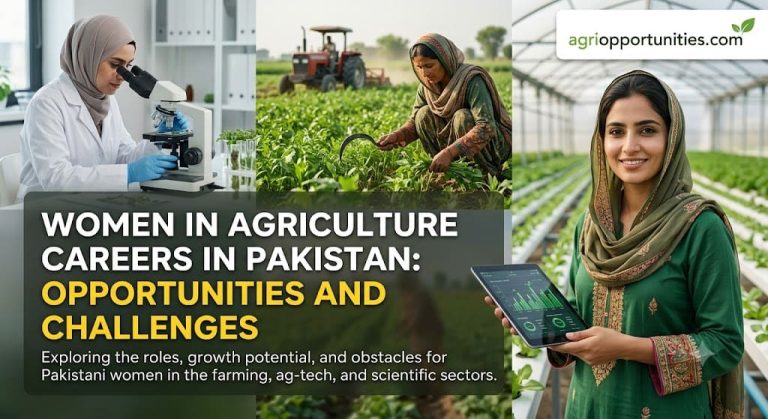
Appropriate farming systems support rural communities by creating dignified work and distributing benefits equitably. Notably, this includes supporting women in agriculture, who make up a significant portion of farming labor worldwide. Thus, system choice has profound social implications beyond food production.
Characteristics of Farming Systems
The characteristics of farming systems help us understand and compare different agricultural approaches across the world. Here are the key distinguishing features. Moreover, these characteristics directly influence system performance and sustainability.
📏 Scale
Farming systems range from micro-scale urban gardens to continental-scale commercial operations. Additionally, scale affects input requirements, market access, and overall environmental impact. Therefore, appropriate scale must match available resources and goals.
⚙️ Input Intensity
Intensive systems use high external inputs, whereas extensive systems use low inputs per hectare. Meanwhile, sustainable systems aim to minimize external inputs while maintaining productivity through ecological processes. Consequently, input intensity is a key indicator of system sustainability.
🔄 Integration
Integrated systems combine multiple enterprises, but monoculture systems grow single crops. Consequently, the degree of integration affects biodiversity, nutrient cycling, and risk management. Furthermore, highly integrated systems often achieve greater resource efficiency.
💻 Technology Adoption
Modern systems incorporate machinery, digital tools, and smart farming technologies. In contrast, traditional systems rely on manual labor and simple farm implements. Nevertheless, both approaches can be productive when appropriately matched to context.
💰 Market Orientation
Subsistence systems produce primarily for household consumption. On the other hand, commercial systems produce for markets. Most real-world systems combine self-provisioning with commercial activity. Thus, market orientation exists on a spectrum rather than as a binary choice.
🌱 Environmental Management
Systems differ dramatically in their approach to soil management, water conservation, and pest control. For example, sustainable systems prioritize stewardship, while extractive systems prioritize short-term output. Therefore, environmental management is a defining characteristic of system type.
Modern Farming Systems: Innovation & Technology
The evolution of farming systems has accelerated dramatically in recent decades. This acceleration is due largely to agricultural technology — agtech — which has transformed what is possible on the farm. Consequently, modern farmers have access to tools and techniques that were unimaginable just a generation ago.
Precision Agriculture
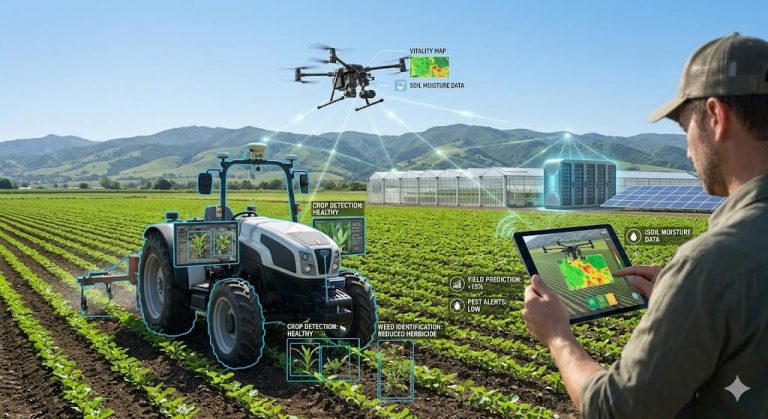
Precision agriculture — also called precision ag or precision farming — uses data, sensors, and digital tools to manage farming inputs with high spatial and temporal precision. Instead of applying fertilizer, water, or pesticides uniformly across a field, precision farming applies exactly what is needed where it is needed and when it is needed. Consequently, this approach reduces waste and improves efficiency. Key technologies include GPS-guided tractors, variable rate application equipment, soil sensors, satellite imagery, and farm management software. Therefore, precision agriculture represents a fundamental shift in how farming is practiced.
Smart Farming & Digital Agriculture
Smart farming integrates the Internet of Things (IoT), big data, artificial intelligence, and connectivity into farm management. For instance, smart farming systems include soil moisture sensors, automated irrigation, connected machinery, and mobile agriculture apps. Furthermore, Agriculture 4.0 describes this current era of digital transformation. As a result, sophisticated farm management is becoming accessible to farmers of all scales.
Drone Farming & Aerial Technology
Drone farming — using unmanned aerial vehicles (UAVs) for agricultural applications — is one of the fastest-growing agtech areas. Notably, DJI Agriculture and XAG drone systems provide crop sprayer drones and mapping drones. These technologies reduce chemical use, improve worker safety, and enable farming in difficult terrain. Consequently, drone farming is revolutionizing crop protection and field monitoring.
Regenerative Farming & Carbon Farming
Regenerative farming — built on no-till farming, diverse crop rotations, cover cropping, integrated livestock, and ecosystem restoration — demonstrates that agriculture can be both highly productive and ecologically restorative. Additionally, carbon farming specifically designs systems to maximize carbon sequestration. Consequently, farmers can potentially earn income through carbon markets while improving their land.
Comparison of Farming Systems
A direct comparison of farming systems helps illustrate their relative strengths and suitability for different contexts. Therefore, the table below summarizes the key differences. Furthermore, this comparison can guide system selection decisions.
| Farming System Type | Scale | Input Level | Primary Goal | Environmental Impact |
|---|---|---|---|---|
| Subsistence Farming | Small | Very Low | Food Security | Low (sustainable at low density) |
| Commercial Farming | Large | High | Profit | Moderate to High |
| Mixed Farming | Small-Medium | Moderate | Balance | Low to Moderate |
| Intensive Farming | Large | Very High | Maximum Yield | High |
| Extensive Farming | Very Large | Low | Low Cost/Unit | Low (per hectare) |
| Agroforestry | Variable | Low | Sustainability | Very Low / Positive |
| Integrated Farming | Variable | Low-Moderate | Resource Efficiency | Very Low / Positive |
How to Start Your Own Farming System: A Practical Guide
For farmers, students, or entrepreneurs asking how to start farming with a well-designed farming system, here is a practical framework. Follow these steps to build a successful operation. Moreover, each step builds on the previous one, so take them in order.
Phase 1: Planning and Resource Assessment
- Assess Your Resources – First, understand your land, water, climate, labor, capital, and market access. Then, conduct soil tests to evaluate current conditions. Without this baseline knowledge, effective planning is impossible.
- Define Your Goals – Next, determine whether you are farming for household food security, commercial income, environmental restoration, or all three. Your goals will guide all other decisions. Therefore, be honest and specific about what you want to achieve.
- Choose Your System – Based on your resources and goals, select the farming system approach that fits best. For example, small-scale mixed farming might suit limited capital. Consequently, system choice should match your circumstances.
- Plan Your Enterprises – Subsequently, decide what crops, livestock, and other enterprises your system will include. Consider integration opportunities carefully. Furthermore, diversification can spread risk across multiple income streams.
Phase 2: Implementation and Farm Management
- Invest in Knowledge and Equipment – Additionally, access agricultural extension services for training. Then, invest in appropriate farm equipment for your scale and budget. However, avoid over-investing in expensive machinery before proving your system works.
- Manage Soil and Water – Implement soil management practices including composting, cover cropping, and water-efficient irrigation systems. These practices form the foundation of long-term productivity. Thus, prioritize soil health from day one.
Phase 3: Marketing, Monitoring, and Adaptation
- Connect to Markets – Before harvest, identify your buyers. Whether local organic markets or export channels, market connection is essential for commercial viability. Consequently, start marketing early rather than waiting until harvest.
- Monitor and Adapt – Finally, use digital farming tools and regular observation to track performance. Then, continuously improve your management decisions based on the data you collect. Therefore, treat farming as a learning process rather than a fixed recipe.
Advantages and Disadvantages of Farming Systems
Understanding the advantages and disadvantages of farming systems helps farmers, students, investors, and policymakers make better decisions. Consequently, the following comparison highlights key trade-offs. Moreover, no single system is perfect for all contexts.
✅ Advantages of Integrated & Sustainable Systems
- Resource efficiency through nutrient cycling
- Income stability through enterprise diversification
- Environmental services (clean water, soil health, biodiversity)
- Climate resilience against variability and shocks
- Long-term land productivity maintained over time
- Reduced dependency on external inputs and suppliers
⚠️ Disadvantages & Challenges
- Intensive systems have significant environmental costs
- Subsistence systems offer limited economic opportunity
- Integrated systems are complex to manage effectively
- Transition periods (2-3 years) can be financially challenging
- Knowledge and training requirements can be substantial
- Market access for sustainable products may be limited initially
The Future of Farming Systems
The future of farming systems is being shaped by five powerful forces. These include climate change, digital technology, ecological consciousness, population growth, and evolving consumer preferences. Each force is driving significant change across the agricultural landscape. Therefore, farmers must stay informed about these trends to remain competitive.
First, climate change is pushing systems toward greater resilience. Consequently, climate-smart agriculture and regenerative agriculture are moving from niche to mainstream. Second, digital technology is transforming every aspect of farm management — from drone farming to smart agriculture systems. Third, ecological consciousness is driving consumer demand for sustainable and organic systems. Fourth, population growth creates demand for more food while also creating new production contexts, including urban agriculture and vertical farming. Finally, evolving consumer preferences toward healthier, more sustainable food are reshaping markets and creating premium opportunities for responsible producers. Thus, the future belongs to those who embrace these changes.
📚 Related Guides from Agri Opportunities
↗️ Organic Agriculture Pakistan ↗️ Sustainable Agriculture Practices ↗️ Precision Agriculture Guide ↗️ Integrated Farming System ↗️ Agroforestry Benefits ↗️ Smart Farming Technologies📚 External Resources & Further Reading
Key Takeaways: Farming System in Agriculture
A farming system in agriculture is the organized framework combining crops, livestock, inputs, and management decisions that defines how a farm operates. Moreover, agricultural farming systems are classified into ten major types. Each type has distinct characteristics, advantages, and disadvantages. Therefore, selecting the right system requires careful consideration of local conditions and personal goals.
The importance of farming systems in agriculture spans multiple dimensions. These include food security, soil health, climate resilience, economic viability, and environmental sustainability. Furthermore, modern farming systems are being transformed by precision agriculture, smart farming, drone technology, and regenerative practices. Therefore, understanding farming systems gives you the foundation to engage meaningfully with one of humanity’s most essential activities. Whether you are a farmer, student, investor, or policymaker, these concepts will serve you well. Consequently, we encourage you to apply these principles to your own agricultural context.
Add Agri Opportunities as a preferred source on Google to see latest blog listings first.
2 Comments