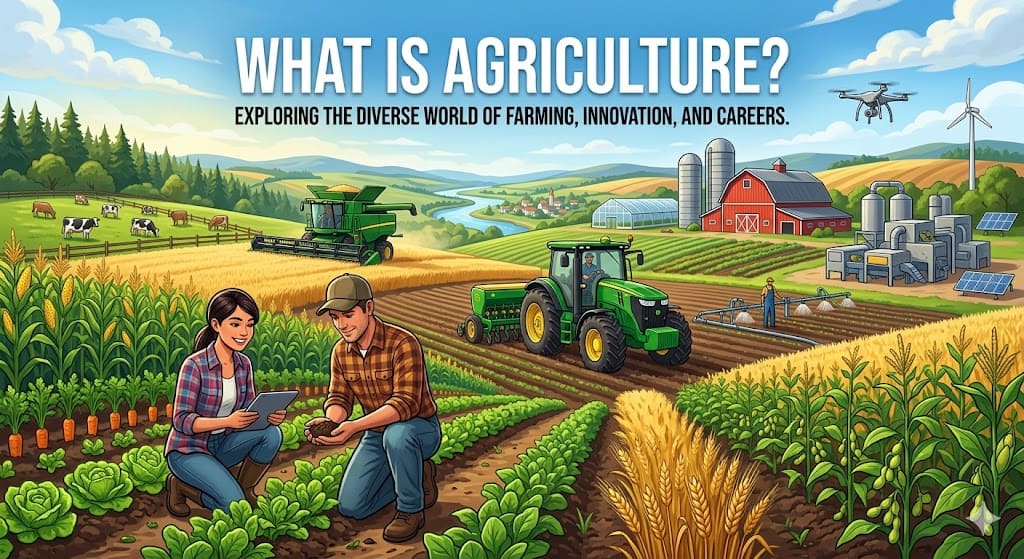
What Is Agriculture? Definition, Types, Importance & More

From its ancient roots to modern precision farming — a deep-dive into the definition, types, history, branches, and importance of agriculture for students, farmers, and business owners.
What Is Agriculture? — Definition, Meaning and Overview
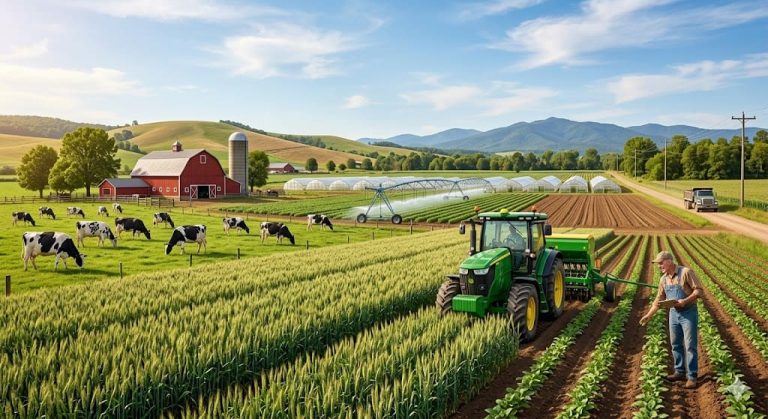
At its most fundamental level, agriculture is the science, art, and practice of cultivating soil, growing crops, and raising livestock for food, fiber, medicinal plants, and other products used to sustain and enhance human life. The agriculture meaning extends far beyond simple farming — it encompasses a vast system of knowledge, technology, ecology, economics, and culture that has shaped human civilization for more than ten thousand years.
The definition of agriculture, as recognized by the Food and Agriculture Organization (FAO) of the United Nations, covers all activities related to crop production, animal husbandry, forestry, fisheries, and aquaculture. In practical terms, agriculture includes everything from a small subsistence farm growing vegetables for a single family to multinational agribusiness corporations supplying global food chains.
📖 Agriculture Definition — Key Takeaway
Agriculture is the organized, intentional management of natural resources — primarily land, water, and living organisms — to produce food, raw materials, and other goods that support human societies. It is both a science and an economic industry, and it remains the foundation of global food security.
The word agriculture comes from the Latin words ager (field) and cultura (cultivation). This agriculture terminology captures the essence of the practice: the deliberate cultivation of fields and natural resources to produce useful outputs. Today, the agriculture industry is a multi-trillion-dollar global sector that directly employs over one billion people worldwide and indirectly affects every single human being on the planet.

Agriculture Explained in Simple Words
If you are looking for a simple definition of agriculture, here it is: Agriculture is the process of growing plants and raising animals to produce food and other useful materials for people. That is the core of it. Anything that involves deliberately managing land or animals to meet human needs falls within the scope of farming and agriculture.
For students and beginners, think of it this way: every time you eat a piece of bread, drink a glass of milk, wear a cotton shirt, or use wooden furniture, you are benefiting from agriculture. The wheat in the bread was grown on a farm. The milk came from a dairy cow. The cotton was cultivated in a field. The wood was harvested from a managed forest. This is what agriculture means in the most tangible, everyday sense.
🌾 Agriculture for Beginners — Quick Summary
- Agriculture = growing crops + raising animals + managing land
- It produces food, clothing, fuel, medicines, and raw materials
- It involves both science (agronomy, biology, chemistry) and practice (farming techniques)
- It operates at scales ranging from backyard gardens to industrial farms
- It is the backbone of the global food system and most national economies
What Is the Difference Between Farming and Agriculture?
This is one of the most common questions among beginners. Farming refers specifically to the practical activity of working on a farm — planting seeds, tending crops, and caring for animals.
Agriculture is the broader discipline that includes farming but also encompasses agricultural science, research, technology, policy, trade, and business. In other words, all farming is agriculture, but not all agriculture is farming.
An agricultural engineer designing an irrigation system, a plant geneticist developing disease-resistant seeds, or a food scientist improving preservation techniques are all doing agriculture — but they are not farmers.
History of Agriculture — When Did Agriculture Begin?
From Hunter-Gatherers to Farmers
The history of agriculture is arguably the most important story in human civilization. Before agriculture, our ancestors were hunter-gatherers — nomadic groups that survived by hunting wild animals and collecting wild plants.
The shift to deliberate farming, known as the Neolithic Revolution or the Agricultural Revolution, began approximately 10,000 to 12,000 years ago and permanently transformed the trajectory of human life.
Multiple Independent Origins
Understanding when agriculture began requires looking at multiple independent origins. Archaeological evidence shows that agriculture did not arise in a single location and spread outward.
Rather, it developed independently in several regions of the world at roughly similar time periods — each producing its own unique set of domesticated crops and animals.
Key Milestones in Agricultural History
The Fertile Crescent — Birthplace of Farming
The earliest known agriculture emerged in the Fertile Crescent (modern-day Iraq, Syria, Turkey, and surrounding areas). Wheat, barley, lentils, and peas were among the first domesticated crops. Goats and sheep were among the first domesticated animals.
China — Rice and Millet
Agricultural development in China centered on rice cultivation in the Yangtze River valley and millet farming in the Yellow River basin — two of the world’s most important crops to this day.
Mesoamerica — Maize, Beans, and Squash
In present-day Mexico and Central America, indigenous peoples domesticated maize (corn), common beans, and squash — the “Three Sisters” that still form a cornerstone of global agriculture and food production.
Sub-Saharan Africa — Sorghum and Yams
Sorghum, yams, oil palms, and other crops were domesticated across sub-Saharan Africa, supporting the growth of complex societies in the region.
Agricultural and Industrial Revolutions
Mechanization, crop rotation systems, and selective breeding dramatically increased yields. The introduction of the plough, seed drill, and later the tractor transformed traditional farming into a science-driven industry.
The Green Revolution
High-yield crop varieties, synthetic fertilizers and pesticides, and expanded irrigation systems enabled massive increases in food production, averting famines and feeding a rapidly growing global population.
Precision Agriculture & Digital Farming
GPS technology, drones, AI, satellite imagery, and biotechnology are reshaping how farms are managed — ushering in the era of precision agriculture and data-driven farm management.
Types of Agriculture — A Comprehensive Overview
One of the most common questions asked by students and researchers is: what are the types of agriculture? There is no single universal classification, but agricultural systems are generally grouped by purpose, method, scale, and ecological approach. Below is a thorough overview of the major types.
1. Subsistence Agriculture
Subsistence agriculture is the oldest and most widespread form of farming. In this system, farmers grow just enough food to feed themselves and their families, with little or no surplus for sale. It is common in developing regions of Africa, Asia, and Latin America. While often dismissed as “backward,” subsistence farming is a sophisticated, place-based system of knowledge and resource management that has sustained communities for millennia.
2. Commercial Agriculture
Commercial agriculture — sometimes called agribusiness — is farming conducted on a large scale with the primary goal of selling produce for profit. It relies heavily on mechanization, chemical inputs (fertilizers and pesticides), advanced irrigation systems, and modern farm management techniques. Commercial agriculture is the dominant form in North America, Europe, and parts of Asia, and it drives much of the global food trade.
3. Organic Farming
Organic farming is a system of agriculture that avoids the use of synthetic chemical inputs such as artificial fertilizers, pesticides, and genetically modified organisms (GMOs). Instead, it relies on natural inputs, crop rotation, compost, biological pest control, and soil management practices that maintain and enhance soil health over time. The global organic food market has grown dramatically in recent decades as consumers demand healthier, more environmentally responsible food options.
4. Sustainable Agriculture
Sustainable agriculture is a philosophy and set of practices designed to meet current food production needs without compromising the ability of future generations to meet their own needs. It integrates environmental health, economic profitability, and social equity. Key practices include crop rotation, integrated pest management, agroforestry, water conservation, and reducing greenhouse gas emissions. Agricultural sustainability is at the center of global food policy discussions today.
5. Intensive Agriculture
Intensive agriculture aims to maximize yield per unit of land through the heavy use of labor, capital, fertilizers, and technology. While highly productive, intensive agriculture can lead to soil degradation, water pollution, and biodiversity loss if not carefully managed.
6. Extensive Agriculture
Extensive agriculture operates over large land areas with lower inputs per unit of land. It is common in regions where land is abundant and cheap, such as the Great Plains of North America or the Australian outback, and is typically associated with grain cropping and livestock farming on rangelands.
7. Horticulture
Horticulture is the science and practice of growing fruits, vegetables, flowers, nuts, and ornamental plants. It is a major branch of agriculture that serves both food and aesthetic purposes. Horticulture includes viticulture (grapes), pomology (fruits), olericulture (vegetables), and floriculture (flowers), and it is a significant contributor to agricultural economies worldwide.
8. Livestock Farming (Animal Husbandry)
Livestock farming involves the breeding, raising, and management of animals such as cattle, poultry, sheep, pigs, goats, and fish for meat, milk, eggs, wool, leather, and other products. It is a critical component of the global food system and a major source of income for hundreds of millions of rural farming families around the world.
Agroforestry
Integrating trees with crops and/or livestock on the same land to enhance productivity and ecosystem services.
Aquaculture
The cultivation of fish, shellfish, and aquatic plants in controlled water environments — a fast-growing sector of global food production.
Greenhouse Farming
Greenhouse farming uses enclosed structures to control temperature, humidity, and light, enabling year-round crop production regardless of external climate conditions.
Hydroponic Farming
Hydroponic farming systems grow plants without soil, using mineral nutrient solutions in water. Highly efficient in water and space usage.
Biodynamic Farming
A holistic, ecological approach to farming that treats the farm as a self-sustaining organism, integrating spiritual and philosophical principles.
Urban Agriculture
The practice of growing food within urban environments — on rooftops, in vertical farms, community gardens, and abandoned lots.
Branches of Agriculture — What Are the Main Branches?
The branches of agriculture represent the specialized scientific and practical disciplines within the broader field. Each branch addresses a specific aspect of agricultural production, management, or technology. For students exploring agricultural science or investors evaluating the agriculture industry, understanding these branches is essential.
| Branch | Focus Area | Key Activities |
|---|---|---|
| Agronomy | Field crop production and soil management | Planting, soil analysis, crop rotation, fertilization |
| Horticulture | Fruits, vegetables, ornamentals | Nursery management, grafting, pest control |
| Animal Husbandry | Livestock farming and management | Breeding, feeding, health management, dairy |
| Agricultural Engineering | Farm machinery and infrastructure | Equipment design, irrigation systems, storage |
| Plant Pathology | Plant diseases and pest control | Disease diagnosis, pesticide application, biocontrol |
| Soil Science | Soil health and composition | Soil testing, nutrient management, erosion control |
| Agricultural Biotechnology | Genetic modification and molecular biology | GMO development, gene editing, tissue culture |
| Food Science | Processing and preservation of food | Food safety, nutrition, packaging, quality control |
| Forestry | Forest management and timber production | Afforestation, timber harvesting, agroforestry |
| Fisheries / Aquaculture | Fish and seafood production | Fish breeding, pond management, water quality |
| Agricultural Economics | Economics of food and farm systems | Market analysis, pricing, trade policy, ROI |
| Rural Development | Improving livelihoods in rural areas | Extension services, cooperative formation, policy |
Importance of Agriculture — Why Is Agriculture Important to Humans?
Understanding the importance of agriculture is fundamental to understanding human civilization itself. Agriculture is not merely one industry among many — it is the foundation upon which all other human activities rest. Without agriculture, there would be no food, no cities, no trade, no civilization as we know it.
1. Food Security and Nutrition
The most obvious and critical role of agriculture is producing the food that feeds humanity. Food security — the ability of all people to access sufficient, safe, and nutritious food — depends entirely on agricultural production. According to the United Nations, the world population will reach nearly 10 billion by 2050, and feeding that population will require agricultural output to increase by approximately 50 percent. This is why agricultural development and innovation are among the most urgent global priorities.
2. Employment and Rural Livelihoods
Agriculture is the primary source of employment for hundreds of millions of people globally. In many developing countries, agriculture employs more than half of the working population and is the main driver of rural development. For farming families, agriculture is not just a job — it is a way of life, a cultural identity, and a multi-generational legacy.
3. Raw Materials for Industry
Agriculture provides the raw materials for a wide range of industries beyond food. Cotton for textiles, timber for construction, rubber for manufacturing, sugarcane for biofuels, and medicinal plants for pharmaceuticals are all agricultural products that feed non-food industries. The boundary between agriculture and industrial production is far more blurred than most people realize.
4. Environmental Stewardship
Well-managed agricultural land can serve as a powerful environmental asset. Healthy farmland supports biodiversity, filters water, sequesters carbon, and prevents soil erosion. Sustainable agriculture practices actively contribute to ecosystem preservation and climate change mitigation. On the other hand, poorly managed agriculture is a leading cause of deforestation, water pollution, and greenhouse gas emissions — highlighting why the relationship between agriculture and the environment is one of the most critical issues of our time.
5. Cultural Heritage and Identity
Traditional farming practices carry centuries of accumulated ecological knowledge, cultural meaning, and community identity. From rice terraces in the Philippines to olive groves in the Mediterranean, agricultural landscapes are living cultural heritage. The preservation of diverse agricultural practices is also a matter of preserving human cultural diversity.
🔑 Why Agriculture Is Important — Key Summary
Agriculture is important because it provides food, employment, raw materials, ecological services, and cultural identity. It underpins the global economy, drives rural development, and will determine humanity’s ability to navigate the climate crisis and feed a growing population sustainably. Quite simply, without agriculture, modern human civilization cannot exist.
Role of Agriculture in the Economy
The role of agriculture in the economy is multidimensional and spans direct production value, employment, trade, industrial linkages, and broader macroeconomic functions. Whether in a developing country where agriculture constitutes 30–40% of GDP or in a post-industrial economy where it represents just 1–2%, agriculture remains structurally indispensable.
Contribution to GDP
In lower-income countries across Africa, South Asia, and Southeast Asia, agriculture’s contribution to GDP remains very high, often representing the largest single sector of the economy. Even in wealthier nations where its GDP share has declined, agriculture underpins entire supply chains, food processing industries, retail sectors, and export economies. The agricultural economy does not exist in isolation — it generates multiplier effects throughout the broader economy.
Foreign Exchange and Trade
Agricultural exports are a major source of foreign exchange earnings for many countries. Brazil’s soybean exports, India’s rice and spice exports, Thailand’s cassava and rubber, and the United States’ corn and wheat shipments are all critical components of global trade. The agriculture industry shapes trade balances, exchange rates, and diplomatic relationships between nations.
Agribusiness and Investment Opportunities
For business owners and agricultural investors, the modern agriculture sector offers a growing range of opportunities. Agribusiness encompasses everything from seed companies and fertilizer manufacturers to food processors, cold-chain logistics firms, agricultural technology startups, and rural fintech platforms. The global agri-food market is increasingly attracting venture capital, private equity, and institutional investors who recognize the sector’s long-term growth fundamentals.
📈 Agricultural Investment — Key Insight for Business Owners
The convergence of food demand growth, climate-driven supply chain disruptions, and technological innovation is creating unprecedented investment opportunities in agriculture. Key areas include precision agriculture technology, sustainable supply chains, alternative proteins, vertical farming, and agricultural fintech. Investors who understand the fundamentals of agricultural science and farm management will be better positioned to evaluate these opportunities.
What Is Modern Agriculture?
What is modern agriculture? Simply put, modern agriculture is the application of scientific knowledge, advanced technology, and data-driven management to enhance the productivity, efficiency, sustainability, and profitability of farming systems. It represents a radical departure from purely experience-based traditional farming, though it often incorporates traditional wisdom as well.
Modern agriculture is characterized by several defining features:
Biotechnology
Genetic engineering, CRISPR gene editing, and genomics are being used to develop crops with improved yields, pest resistance, drought tolerance, and nutritional profiles.
Precision Agriculture
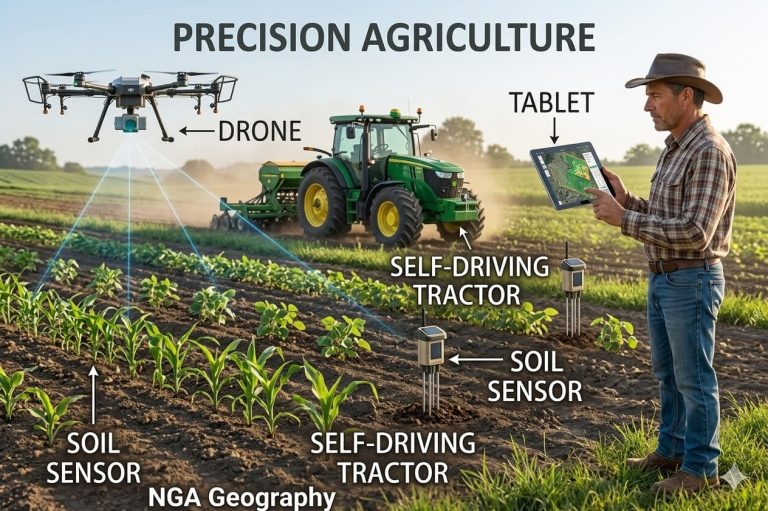
GPS-guided tractors, satellite imagery, soil sensors, and drone monitoring allow farmers to apply inputs precisely where and when they are needed, dramatically reducing waste.
Digital Farm Management
Farm management software, IoT (Internet of Things) devices, and AI-powered analytics are transforming how farmers plan, monitor, and optimize their operations.
Advanced Irrigation Systems
Drip irrigation, sprinkler systems, and smart water management technologies have dramatically improved water-use efficiency in agriculture.
Agricultural Mechanization
Modern agricultural tools and equipment — from combine harvesters to robotic weeders — have transformed labor productivity on farms around the world.
Controlled Environment Agriculture
Greenhouse farming and vertical farming use tightly controlled environments to grow crops year-round with minimal land and water use.
The transition from traditional farming to modern agriculture has not been without controversy.
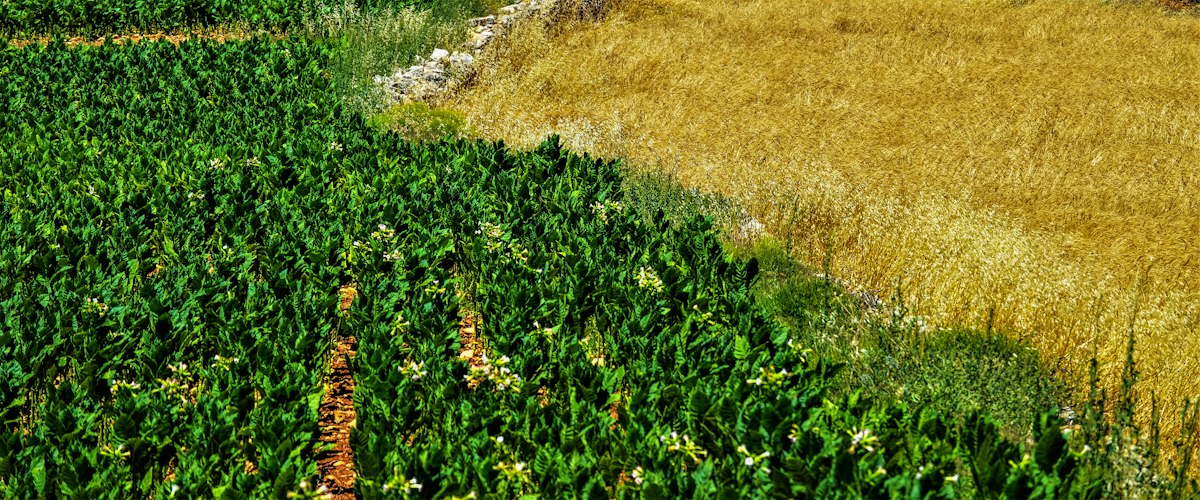
Critics point to concerns about biodiversity loss, the overuse of fertilizers and pesticides, corporate concentration in the seed and agrochemical industries, and the social disruption caused by the displacement of rural labor. These are legitimate and important concerns that must be addressed as the agriculture sector continues to evolve.
Sustainable Agriculture & Organic Farming — The Path Forward
Sustainable agriculture and organic farming have moved from the fringes of the agricultural world to the mainstream of policy, investment, and consumer behavior. They represent a response to the environmental and social costs of intensive, input-heavy farming and an effort to build agricultural systems that can endure for generations.
Core Principles of Sustainable Agriculture
Agricultural sustainability rests on three interconnected pillars: ecological health, economic viability, and social equity. Sustainable farming systems aim to maintain and improve soil health, conserve water, reduce chemical inputs, protect biodiversity, and ensure fair livelihoods for farmers — all while producing sufficient food to meet human needs.
Key sustainable agriculture techniques include:
- Crop rotation — alternating crops across seasons to break pest and disease cycles and improve soil nutrient levels naturally
- Cover cropping — planting non-cash crops between growing seasons to prevent erosion and enrich soil
- Integrated pest management (IPM) — using biological controls and targeted chemical use to minimize pesticide dependency
- Agroforestry — combining trees with crops to enhance biodiversity and ecosystem services
- Conservation tillage — reducing or eliminating plowing to preserve soil structure and carbon content
- Composting and organic matter management — recycling organic waste to improve soil health
Organic Farming Methods
These methods explicitly prohibit the use of synthetic chemicals and GMOs. Instead, they rely on natural amendments like compost, green manures, and biological pest controls. Organic certification standards (such as USDA Organic or EU Organic) ensure that products labeled organic meet defined production criteria. While organic yields are often lower than conventional yields, organic farms typically achieve higher prices and can deliver significant environmental benefits, particularly in terms of soil health and biodiversity.
🌿 Organic vs. Conventional vs. Sustainable Agriculture
Organic farming is a certified, defined system. Sustainable agriculture is a broader philosophy — an organic farm is sustainable, but not all sustainable farms are fully organic. Conventional agriculture uses synthetic inputs but can still incorporate sustainable practices like crop rotation and water conservation. The future of agriculture likely lies in integrating the best elements of all three approaches.
Agricultural Technology & Precision Agriculture
Agricultural technology is one of the fastest-growing sectors of the global economy. Often referred to as AgTech, this field encompasses the hardware, software, data analytics, and biological innovations that are transforming how food is grown, managed, and distributed. For agri-investors and business owners, AgTech represents one of the most compelling investment opportunities of the 21st century.
What Is Precision Agriculture?
Precision agriculture is the use of technology to observe, measure, and respond to variability in crops and livestock with the goal of optimizing productivity and minimizing waste.
Instead of applying the same treatment uniformly across an entire field, precision agriculture uses real-time data — from soil sensors, weather stations, satellite imagery, and drone surveillance — to tailor inputs (water, fertilizer, pesticide) to the exact needs of each micro-zone. This results in significant savings in input costs while improving yields and reducing environmental impact.
Smart Farming Technology
This technology integrates precision agriculture tools with digital connectivity and AI. Smart sensors embedded in the soil transmit moisture and nutrient data wirelessly to a farm management platform. AI algorithms analyze this data alongside satellite imagery and weather forecasts to generate actionable recommendations for the farmer. Autonomous tractors and robotic harvesters carry out operations with minimal human intervention. This interconnected system is often called the “Internet of Agricultural Things” (IoAT).
Hydroponic and Vertical Farming
Hydroponic farming systems grow crops in nutrient-rich water solutions without soil. When combined with LED lighting and precise climate control, hydroponics can achieve yields 10–20 times higher per square meter than conventional field farming, with 90% less water usage. Vertical farms — multi-story indoor facilities that stack growing layers to maximize space efficiency — are increasingly being established in urban centers, reducing the distance from farm to consumer and the carbon footprint of food logistics.
Agricultural Robots
Robotic weeders, fruit pickers, and crop scouts are reducing labor costs and improving precision in harvesting and field management.
AI & Machine Learning
AI-powered platforms analyze vast datasets to predict crop diseases, optimize planting schedules, and forecast market prices.
Drone Technology
Agricultural drones are used for field mapping, crop health monitoring, targeted spraying of fertilizers and pesticides, and livestock tracking.
Blockchain in Agriculture
Blockchain technology is being used to enhance food traceability, supply chain transparency, and smallholder farmer payments.
Agriculture in Daily Life — How Agriculture Affects You Every Day
For most urban dwellers, agriculture in daily life is invisible — hidden behind supermarket shelves, restaurant menus, and packaged consumer goods. Yet agriculture touches virtually every aspect of modern life in ways that few people pause to consider.
Your morning cup of coffee begins with coffee plants cultivated on tropical farms. The newspaper or book you read is made from wood pulp sourced from managed forests. The medicines in your cabinet contain compounds derived from agricultural plants. The fuel in your car may include bioethanol produced from corn or sugarcane. The clothes you wear are woven from cotton, wool, or other agricultural fibers. Even many synthetic materials have agricultural origins.
Agriculture and food production are so deeply woven into the fabric of daily life that their absence would mean the collapse of civilization as we know it. This is not hyperbole — it is a straightforward statement of fact. The global food system that agriculture sustains is the single most complex and essential logistical operation in human history.
🍽️ Agricultural Products in Your Daily Routine
- Food: grains, fruits, vegetables, meat, dairy, eggs, seafood, spices, oils
- Beverages: coffee, tea, wine, beer, fruit juices
- Clothing: cotton, wool, silk, linen, leather
- Shelter: timber, bamboo, thatch, natural rubber seals
- Medicine: plant-derived pharmaceuticals, herbal medicines, vaccines (via animal research)
- Energy: biofuels, biogas, firewood
- Industrial materials: natural rubber, plant-based plastics, starch-based adhesives
Agriculture and the Environment
The relationship between agriculture and the environment is one of the most complex and consequential of our time. Agriculture is simultaneously one of the greatest threats to the natural environment and one of its greatest potential custodians. How we manage this relationship will determine the environmental future of our planet.
Environmental Challenges of Agriculture
Intensive agriculture has contributed significantly to several major environmental challenges:
- Deforestation: Agricultural expansion is the leading driver of global deforestation, particularly in tropical regions like the Amazon and Southeast Asia.
- Soil degradation: Overuse of synthetic inputs, excessive tillage, and monoculture farming have degraded soil health on hundreds of millions of hectares of farmland.
- Water pollution: Runoff of fertilizers and pesticides from farms contaminates rivers, lakes, and groundwater, damaging aquatic ecosystems and human water supplies.
- Greenhouse gas emissions: Agriculture accounts for approximately 10–12% of global greenhouse gas emissions, through methane from livestock, nitrous oxide from fertilizers, and carbon dioxide from land-use change.
- Biodiversity loss: The conversion of natural habitats to farmland and the use of pesticides have driven dramatic declines in insect populations, bird species, and overall biodiversity.
Climate Change and Agriculture
Climate change and agriculture are locked in a deeply troubling feedback loop. Agriculture contributes to climate change through its greenhouse gas emissions, while climate change simultaneously threatens agricultural productivity through rising temperatures, shifting rainfall patterns, more frequent extreme weather events, and sea-level rise affecting coastal farmland. Addressing this double challenge is one of the defining priorities of 21st-century agriculture policy and research.
Agriculture as an Environmental Solution
The same land that has been a source of environmental damage can also be a powerful solution. Regenerative agriculture — which focuses on restoring soil health, increasing biodiversity, and sequestering atmospheric carbon — is gaining significant momentum as a climate strategy. Agroforestry, cover cropping, and conservation tillage are among the practices that can transform farmland from a carbon source into a carbon sink. The potential of well-managed agricultural landscapes to contribute to both food security and climate stability is enormous.
The Future of Agriculture
A Future of Challenges and Opportunities
The future of agriculture will be shaped by the intersection of population growth, climate change, and technological innovation. Shifting consumer preferences and evolving policy frameworks add further complexity.
It is a future full of both serious challenges and extraordinary opportunities for those ready to innovate.
Key Trends Shaping Agricultural Development
1. Climate-Smart Agriculture: As climate change intensifies, the agriculture sector is developing climate-smart approaches that simultaneously increase productivity, build resilience to climate impacts, and reduce emissions. This includes drought-tolerant crop varieties, improved water management, and agroforestry systems.
2. Alternative Proteins: Plant-based proteins, cultivated meat (grown from animal cells without slaughter), and insect protein are challenging traditional livestock farming as sources of high-quality protein. This shift has profound implications for land use, water consumption, and greenhouse gas emissions.
3. Circular Agriculture: Circular agriculture systems aim to close nutrient cycles, reduce waste, and eliminate the need for external inputs by designing production systems that mimic natural ecosystems. Waste from one part of the farm becomes a resource for another.
4. Data-Driven Farm Management: The explosion of agricultural data — from soil sensors, satellite imagery, weather stations, and market platforms — is enabling a new generation of data-driven farm management decisions that were simply not possible a decade ago.
5. Agricultural Biotechnology Advances: CRISPR gene editing is enabling the development of new crop varieties with enhanced nutritional profiles, pest resistance, and climate adaptability at a pace and precision far beyond traditional plant breeding. These advances will be central to achieving the yield increases needed to feed a growing world population.
🌍 Agricultural Sustainability — The Bottom Line
The future of agriculture must be one of agricultural sustainability — producing more food with less land, less water, and lower environmental impact, while ensuring that farming remains economically viable and socially equitable. This will require not just technological innovation but also fundamental shifts in policy, investment, education, and the relationship between consumers and the food they eat.
Frequently Asked Questions (FAQs)
Basics & Definitions
History, Branches & Economy
Modern & Sustainable Agriculture
Agriculture: The Root of Everything
From the first seeds planted in the Fertile Crescent ten thousand years ago to the precision-guided robotic farms of today, agriculture has been and remains the foundation of human civilization. It feeds us, clothes us, shelters us, employs us, and shapes the landscapes and cultures we call home.
Whether you are a student beginning your academic journey in agricultural science, a farmer seeking practical knowledge, a business owner evaluating investment opportunities, or simply a curious reader trying to understand the world — we hope this guide has given you a clear, thorough, and inspiring introduction to what agriculture is and why it matters.
© 2026 · Agri Opportunities · All information for educational purposes
Add Agri Opportunities as a preferred source on Google to see our latest blogs first.
Useful Links
How to Calculate Agricultural Density: Formula, Examples & Expert Insights
Regenerative Agriculture: The Future of Sustainable Farming and Soil Health
Modern Agriculture Techniques: A Complete Guide to Smarter, More Profitable Farming
I am actually delighted to glance at this blog
posts which includes lots of helpful facts, thanks for providing these
kinds of information.