Agriculture Universities in China – Faculty Email List for CSC Scholarship 2026-2027

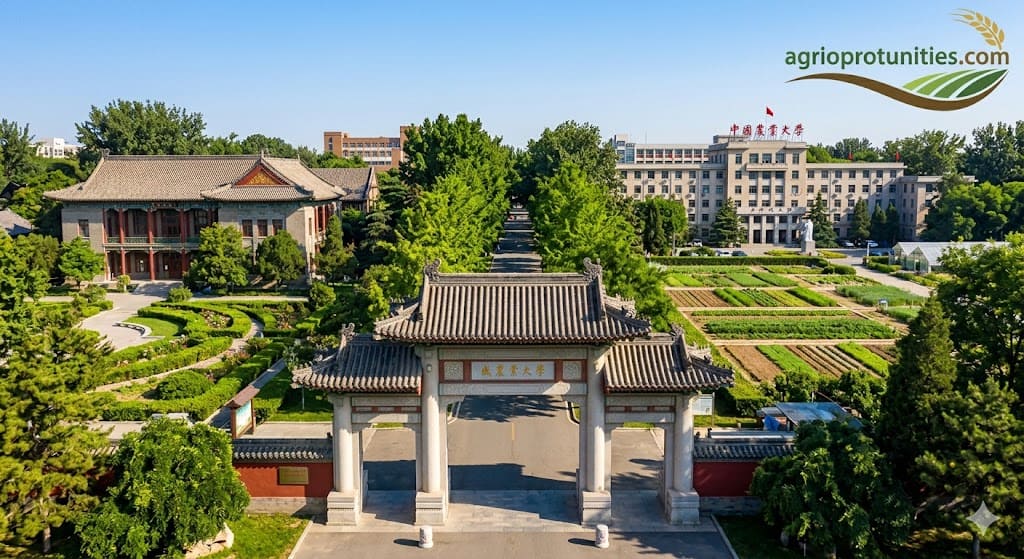
If you are planning to pursue an MS, MPhil, PhD, or research-based graduate program at an agriculture university in China, the journey begins long before you fill out an official application form for the CSC Scholarship or other programs. This guide to agriculture universities in China for CSC Scholarship 2026 will help you find the right professor, craft a compelling email, and secure your admission. It begins with a single, well-written email to the right professor.
Understanding the CSC Scholarship
The Chinese Government Scholarship (CSC Scholarship) is one of the largest and most competitive fully funded scholarship programs in the world. For 2026 intake, knowing how it works is key:
- Type A (University-Nominated): The university itself recommends you. Having a professor who knows your profile gives you a much stronger chance of being nominated.
- Type B (Embassy-Nominated): You apply through your home country’s embassy. Even here, submitting evidence of professor communication or a supervisor acceptance letter can significantly strengthen your file.
In addition to the CSC Scholarship, many universities offer their own university scholarships, provincial scholarships, and faculty-funded research positions. For these, a professor’s support is almost always essential.
Top Agriculture Universities in China for CSC Scholarship — Department-Wise Faculty Guide
The universities below are among the most relevant for international students. Click on the faculty links to start your search.
1. China Agricultural University (CAU)
Consistently ranked among the top agriculture universities in the world. Its research output in crop science, biological sciences, and agricultural technology is globally respected.
| College | Faculty / Department Links |
|---|---|
| College of Agronomy & Biotechnology | Agronomy | Breeding & Genetics | Plant Pathology | Entomology | Pomology | Vegetable Science | Horticulture |
| College of Biological Science | Plant Sciences | Zoology | Microbiology | Molecular Biology | Agricultural Biotechnology |
| College of Environment | Soil Science & Ecology |
| College of Food Science | General Faculty |
2. Huazhong Agricultural University (HZAU)
Located in Wuhan, HZAU is a leading institution for plant science, crop research, and agricultural systems. It attracts a large number of CSC Scholarship applicants annually.
| College | Faculty / Department Links |
|---|---|
| College of Plant Science & Technology | Faculty List |
| College of Forestry & Horticulture | Faculty List |
| College of Resources & Environment | Faculty List |
| College of Engineering & Technology | Agricultural Engineering Faculty |
3. Nanjing Agricultural University (NAU)
NAU is one of China’s most established agriculture universities, covering an exceptionally broad range of disciplines from agronomy to food science.
| College | Faculty / Department Links |
|---|---|
| College of Agriculture | Agronomy & Genetics |
| College of Plant Protection | Faculty List |
| College of Horticulture | Faculty List |
| College of Resources & Environment | Faculty List |
| College of Food Science | Faculty List |
4. Northwest A&F University (NWAFU)
Based in Yangling, this is one of the most comprehensive and specialized agriculture universities in China, known for dryland farming, forestry, and water resources.
| College | Faculty / Department Links |
|---|---|
| College of Plant Protection | Faculty List |
| College of Agronomy | Faculty List |
| College of Horticulture | Faculty (Type 1) | Faculty (Type 2) |
| College of Forestry | Faculty List |
| College of Natural Resources & Environment | Faculty List |
| College of Food Science | Faculty (List 1) | Faculty (List 2) |
| College of Water Resources | Faculty (List 1) | Faculty (List 2) |
5. Fujian Agriculture and Forestry University (FAFU)
FAFU offers a distinctive mix of mainstream agriculture and specialized fields like Bee Science, making it a strong option for niche interests.
| College | Faculty / Department Links |
|---|---|
| College of Plant Protection | Faculty List |
| College of Agronomy | Faculty List |
| College of Crop Science | Faculty List |
| College of Forestry | Forestry Faculty | Faculty List |
| College of Bee Science | Faculty List |
| College of Food Science | Faculty (List 1) | Faculty (List 2) |
| College of Horticulture | Faculty (List 1) | Faculty (List 2) | Faculty (List 3) |
6. South China Agricultural University (SCAU)
Located in Guangzhou, SCAU is one of the most searched institutions by international students. Its subtropical location is ideal for regionally applicable research.
| College | Faculty / Department Links |
|---|---|
| College of Agriculture | Faculty List |
| College of Horticulture | Faculty List |
| College of Natural Resources & Environment | Faculty (List 1) | Faculty (List 2) |
| College of Food Science | Faculty (List 1) | Faculty (List 2) |
| College of Forestry | Faculty List |
7. Other Key Agriculture Universities
The Chinese agriculture higher education landscape extends well beyond the most widely known institutions. Explore faculty pages at these universities for less competitive but academically compatible supervisor opportunities.
Best Agriculture Disciplines to Target at Agriculture Universities in China CSC
Searching for a professor by university name alone is a common mistake. A far more effective strategy is to search by discipline and then match it to universities and departments.
| Discipline | Research Focus & Best-Fit Universities |
|---|---|
| Agronomy | Crop production systems, soil-plant relationships, climate adaptation. Best at: CAU, NAU, NWAFU, HZAU, SCAU. |
| Plant Breeding & Genetics | Genomics, quantitative genetics, marker-assisted selection. Best at: CAU, NAU, HZAU, Zhejiang University, NWAFU. |
| Horticulture | Fruits, vegetables, ornamental plants. Best at: NWAFU, NAU, SCAU, FAFU, Northeast Agricultural University. |
| Soil Science & Environment | Soil health, land degradation, nutrient cycling, sustainable land use. Best at: CAU, NAU, NWAFU, HZAU. |
| Food Science | Food technology, processing, safety, fermentation. Best at: CAU, NAU, SCAU, Northeast Agricultural University, FAFU. |
| Forestry | Forest management, timber science, forest ecology. Best at: FAFU, Nanjing Forestry University, NWAFU, SCAU. |
| Agricultural Engineering | Irrigation systems, farm mechanization, precision agriculture. Best at: HZAU, CAU, NWAFU. |
| Plant Pathology | Fungal, bacterial, and viral diseases of crops. Best at: Many universities, particularly those with strong crop science programs. |
| Entomology | Pest ecology, biological control, insect physiology. Best at: A strong, underutilized discipline with dedicated faculty across most top universities. |
Where to Find Official Deadline Information
| Source | Purpose |
|---|---|
| CSC Official Website (https://studyinchina.csc.edu.cn/) | CSC application portal; official dates are posted here annually. |
| University International Student Office | Check each university’s admissions page for Type A deadlines and university-specific scholarships. |
| Chinese Embassy (Your Country) | Visit the embassy website for Type B application deadlines and requirements, which vary by country. |
| CSC Alumni & Facebook Groups | Join CSC-focused communities to stay updated on deadline announcements and share information with other applicants. |
How to Find the Right Professor
Finding a suitable supervisor is a research task in itself. Here is a clear process to follow:
- Step 1: Define Your Research Focus. Write down your exact research interest in one or two sentences. This precision will immediately eliminate irrelevant professors.
- Step 2: Match Your Discipline to Universities. Use the table in the section above to shortlist 2-4 universities that are strong in your field.
- Step 3: Navigate Faculty Directories. Go directly to the college or department-level pages from the links provided. Look for:
- Faculty profile pages listing research interests.
- Lab or research group websites.
- Professor publications on ResearchGate or Google Scholar.
- Step 4: Evaluate Fit. Before reaching out, ask yourself three questions:
- Does their recent research overlap with my background?
- Do they appear to supervise graduate students?
- Is this professor from a college I would actually be applying to?
How to Write an Email That Gets a Reply
Most students’ email outreach fails because it is too vague, too long, or unfocused. The goal of your first email is to establish research relevance and invite a conversation.
Core Elements of a Strong Professor Email
Your email should include the following in a concise and professional format:
- Your name and nationality.
- Your current or most recent degree and institution.
- Your specific research background (not just the field — the actual focus).
- A brief, specific mention of the professor’s work that resonates with you.
- Your intended program (MS or PhD) and the 2026 intake.
- Your scholarship intention (CSC Scholarship or other).
- An attached CV.
- An offer to share more documents if needed.
Example Subject Lines That Work
- Prospective PhD Applicant in Plant Breeding — CSC Scholarship 2026
- MS Applicant in Agronomy Seeking Research Supervision
- International Student Interested in Your Food Science Research Group — 2026 Intake
Email Template
Subject: Prospective PhD Applicant in [Your Discipline] — CSC Scholarship 2026
Dear Professor [Last Name],
My name is [Your Full Name]. I have recently completed my [degree] in [field] from [university name], where my research focused on [your specific research topic in one sentence].
I came across your faculty profile while looking for supervisors working in [research area], and I found your work on [mention specific topic or paper] particularly relevant to my academic background. I am especially interested in [specific aspect of their research that connects to your background].
I am planning to apply for the [MS/PhD] program for the 2026 intake at [University Name] and intend to apply through the CSC Scholarship route. I would greatly appreciate it if you could let me know whether you are currently accepting international graduate students in your research group.
I have attached my CV for your review and would be happy to share my transcripts, research proposal, or any other documents at your convenience.
Thank you for your time.
Sincerely,
[Your Full Name]
[Country]
[Email Address]
Common Mistakes to Avoid
- Sending identical emails to every professor. Personalization is not optional—it is the minimum bar for being taken seriously.
- Mismatching your background with the professor’s research. This tells them you did not read their profile.
- Starting your email with a request for an acceptance letter. This frames the conversation transactionally. Show genuine research interest first.
- Not attaching a CV. Without a CV, a professor has no way to evaluate your academic background.
- Using informal language or excessive flattery. Keep your tone professional, direct, and collegial.
Frequently Asked Questions
1. Do I need to contact a professor before applying for the CSC Scholarship?
It is not always required, but it is strongly recommended for research-based programs. Many successful CSC Scholarship applicants credit professor contact as a key part of their strategy.
2. How long should I wait for a reply?
Allow two to three weeks before following up. A polite single follow-up after three weeks is appropriate.
3. What if the professor says they are not accepting students?
Politely thank them and ask if they know of a colleague in their department who might be accepting students in a similar area.
4. Is it better to apply through the CSC Scholarship or directly through a university scholarship?
Both are legitimate. The CSC Scholarship is more widely recognized, but university scholarships are sometimes easier to obtain with strong professor support. Many students apply through both simultaneously.
5. Can I contact professors at agricultural universities in China at multiple universities at the same time?
Yes, absolutely. When applying to Agriculture Universities in China CSC programs, targeting multiple professors across different institutions is not just acceptable—it is a widely recommended strategy.
Add Agri Opportunities as a preferred source on Google to see our latest career guides and job listings first.