Agricultural Robotics: Benefits, Applications, Types, and Future Trends

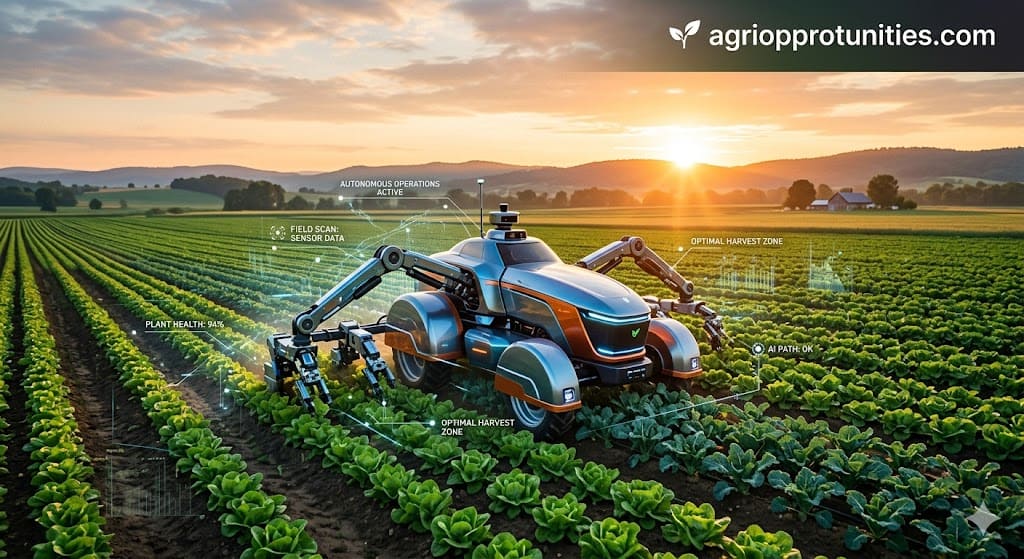
Modern farming no longer relies solely on tractors and manual labor. Today, agricultural robotics is fundamentally transforming how farmers plant, monitor, harvest, and manage crops across every scale of operation, from small family farms to vast commercial enterprises. From autonomous farm machines to AI-powered weed control systems, robots are helping farms become more productive, efficient, and environmentally responsible. The convergence of robotics in agriculture, smart farming, automation in farming, and data intelligence is creating an agricultural revolution that the world hasn’t seen since the invention of mechanized plowing. Farmers increasingly use these smart farming robots to solve major agricultural challenges, including labor shortages, resource waste, and inconsistent yields. In this article, we’ll explore what agricultural robotics is, why it matters, the different types of robots operating on farms today, their real-world applications, the benefits and challenges they bring, and what the future holds for this rapidly evolving field.
What Is Agricultural Robotics?
What is agricultural robotics? Agricultural robotics refers to the design, development, and deployment of robotic systems that perform tasks within farming and food production environments. Unlike traditional machinery that requires constant human operation, agricultural robots are intelligent systems that combine robotics, artificial intelligence, sensors, GPS, machine learning, and automation to carry out complex tasks with minimal human intervention.
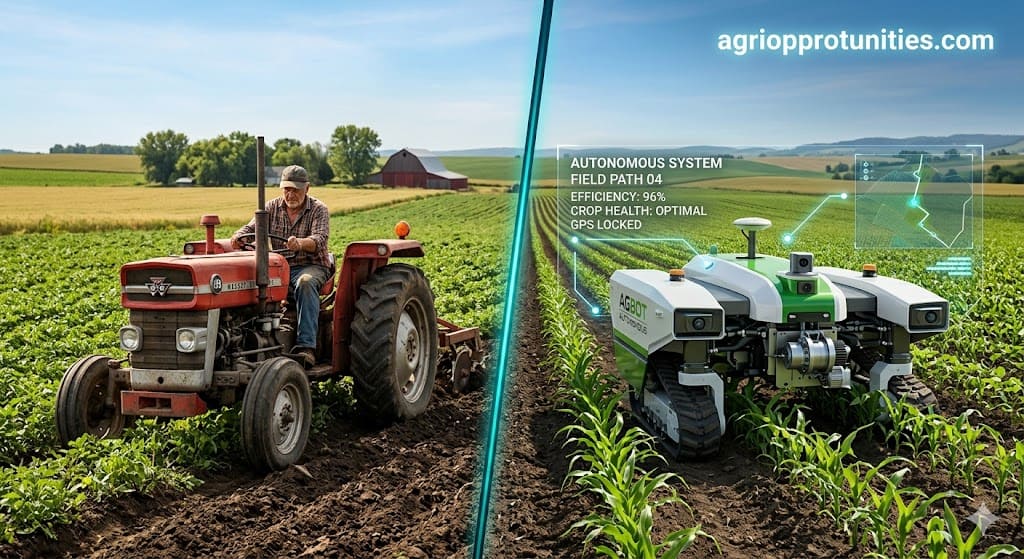
The critical distinction between conventional farm equipment and modern farm robotics lies in adaptability and intelligence. A traditional tractor requires a human driver to navigate and make real-time decisions. An autonomous tractor, by contrast, can map an entire field, plan the most efficient route, and execute planting or tilling operations without anyone in the cab. This kind of agricultural automation technology enables machines to sense their environment, process data, and respond dynamically, making them far more capable than their mechanical predecessors.
Agricultural robots are being used across a wide spectrum of farming environments. For instance, in crop farming, they handle everything from seeding to harvesting. In greenhouse farming, they monitor plant health and apply treatments with surgical precision. Furthermore, in livestock farming, robotic systems manage feeding, milking, and health monitoring. Even orchard farming is being transformed, with robots capable of navigating uneven terrain and identifying ripe fruit with remarkable accuracy.
Many of these systems are designed to perform repetitive, data driven, or labor intensive tasks that once demanded large human workforces. As a result, agricultural automation is becoming one of the most important pillars of modern farm management.
Why Agricultural Robotics Is Important in Modern Farming
The importance of robotics in agriculture cannot be overstated, especially given the mounting pressures the global food system faces. One of the most significant drivers of adoption is the labor shortage in agriculture. Across North America, Europe, and parts of Asia, farms are struggling to find and retain seasonal workers. Younger generations are increasingly urbanizing, and immigration policy shifts in many countries have tightened the labor pool further. This scarcity is pushing farms toward automation as a practical survival strategy rather than a luxury upgrade.
Beyond labor, there is enormous pressure to increase crop yields while simultaneously reducing costs. Conventional farming methods often involve blanket applications of fertilizers, pesticides, and water, approaches that are both wasteful and increasingly expensive. Automation in farming, guided by real-time data, allows growers to apply exactly what is needed, exactly where it is needed, and at precisely the right moment. This level of efficiency is simply not achievable through manual effort alone.
Climate change adds another layer of urgency to the future of farming technology. Unpredictable weather patterns, drought conditions, and shifting growing seasons demand that farmers respond faster and more intelligently than ever before. Data-driven farming powered by agricultural robots provides the kind of real-time insights and adaptive responses that traditional methods cannot match. For investors and agri-business owners, the ROI case is becoming clearer with each passing season as the cost of robotic systems continues to decline while their capabilities expand.
At the same time, precision farming is becoming essential rather than optional. Farms that can reduce waste, improve accuracy, and respond to field variability quickly are more likely to remain competitive in a demanding agricultural economy. For a deeper dive into data-driven approaches, you can explore more about modern agriculture techniques.
Types of Agricultural Robots
The landscape of farm robotics is diverse and rapidly expanding. Specifically, different types of robots address different stages of the agricultural workflow, and as such, understanding this variety helps farmers and investors identify where the highest-value opportunities lie.
Autonomous Tractors
Self-driving farm machines represent one of the most significant advances in autonomous farming equipment. GPS-guided autonomous tractors can navigate fields with centimeter-level accuracy, performing planting, tilling, and spraying operations without a human operator. These machines significantly reduce the need for manual driving while improving planting and tilling precision, resulting in straighter rows, more consistent seed depth, and better use of every inch of field space. Some systems allow a single operator to monitor multiple tractors simultaneously from a tablet, dramatically multiplying one person’s effective output.
Robotic Harvesters
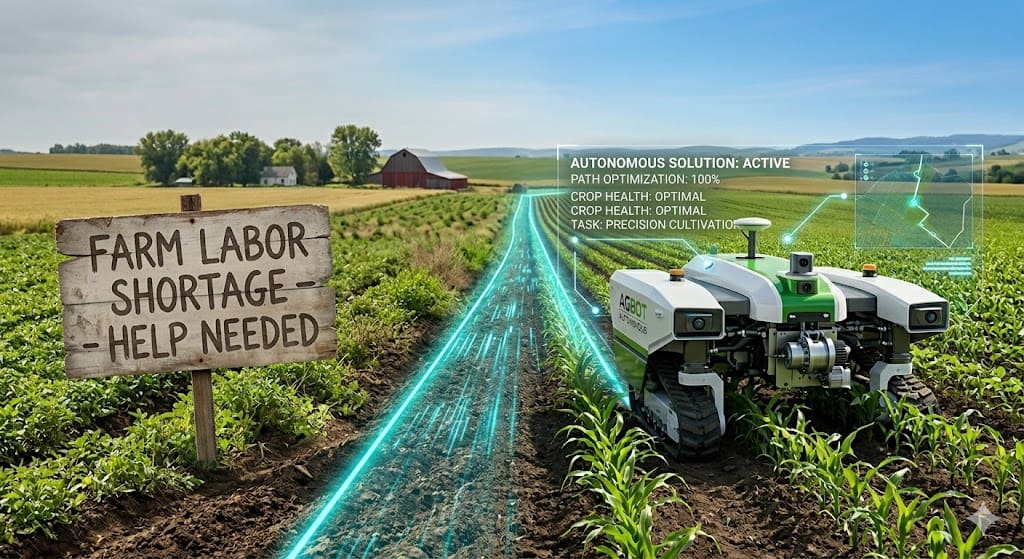
Harvesting is historically one of the most labor-intensive stages of farming, and it is exactly where robotic harvesting is making its most dramatic impact. Specifically, fruit and vegetable picking robots use computer vision to assess ripeness, locate produce, and pick it without bruising, a level of gentleness and accuracy that can be difficult to maintain across a large human workforce working long hours. As a result, these harvesting robots in agriculture are being successfully deployed in strawberry fields, apple orchards, tomato greenhouses, and lettuce farms. Crop picking robots are especially valuable in environments where harvesting windows are short and labor demand is high.
Weeding and Spraying Robots
Rather than applying chemicals uniformly across an entire field, precision spraying robots identify individual weeds using AI weed detection algorithms and apply herbicide only to the target plant. This spot-spraying approach can reduce chemical use by up to 90 percent compared to conventional blanket spraying. Robotic weed control not only cuts input costs but also reduces environmental contamination of soil and waterways, making it a cornerstone of sustainable farming practices.
Agricultural Drones
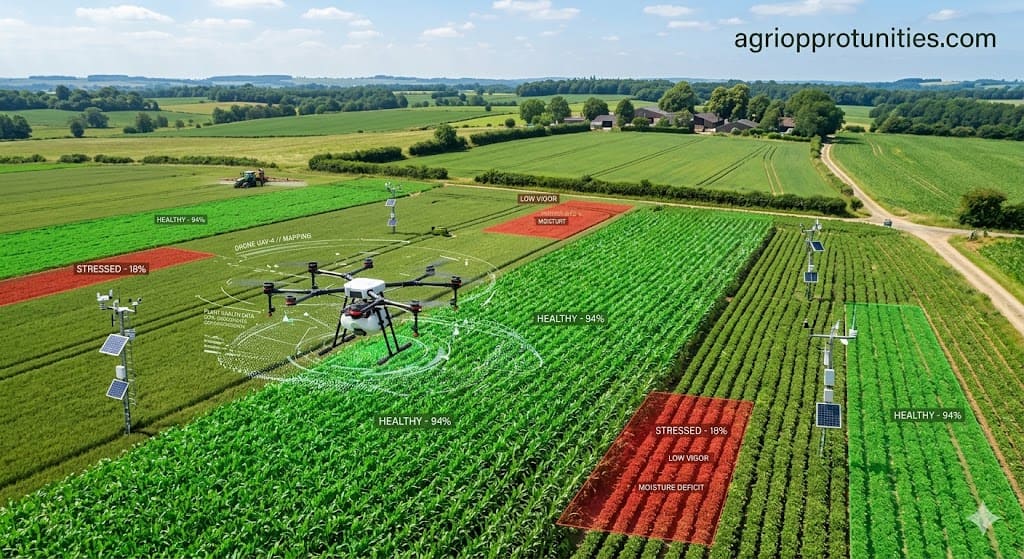
Agricultural drones have evolved rapidly into one of the most versatile tools in the modern farmer’s arsenal. Drone farming technology allows crop monitoring drones to fly over thousands of acres in a fraction of the time it would take to walk the same ground, capturing high-resolution imagery that reveals crop stress, pest infestations, irrigation problems, and disease outbreaks before they become visible to the naked eye. Agricultural drones equipped with multispectral cameras can generate detailed field health maps that guide management decisions with a level of spatial precision impossible through manual scouting.
Robotic Milking Systems
In the dairy sector, robotic milking systems have become increasingly mainstream. These systems allow cows to be milked on their own schedule rather than being forced into twice-daily routines, which research suggests can improve animal welfare and milk production. Dairy automation also provides continuous monitoring of each animal’s milk quality, volume, and health indicators, enabling early detection of mastitis and other conditions that could otherwise reduce yields or require costly veterinary intervention. Livestock robotics is removing one of the most time-consuming and physically demanding tasks from dairy farming while delivering better data and better outcomes.
Seeding and Planting Robots
Seeding robots are engineered for precision seed placement, ensuring that each seed is planted at the optimal depth, spacing, and orientation. Robotic planting systems reduce seed waste by eliminating the over-seeding that characterizes many manual and broadcast planting approaches. Planting automation also allows variable seeding rates across a field based on soil maps and historical yield data, an application that sits squarely within the precision agriculture model and delivers measurable gains in crop uniformity and final yield.
Table: Types of Agricultural Robots at a Glance
| Robot Type | Primary Function | Key Technologies | Main Benefits | Common Use Cases |
|---|---|---|---|---|
| Autonomous Tractors | Field navigation, tilling, planting, spraying | GPS, sensors, automation, AI navigation | Reduces labor, improves route accuracy, boosts efficiency | Large-scale crop farms |
| Robotic Harvesters | Picking fruits and vegetables | Computer vision, robotic arms, AI ripeness detection | Faster harvesting, less crop damage, lower labor dependence | Orchards, berry farms, greenhouses |
| Weeding & Spraying Robots | Weed identification and targeted spraying | AI weed detection, cameras, precision sprayers | Lower chemical use, reduced costs, eco-friendly farming | Row crops, specialty crops |
| Agricultural Drones | Crop monitoring and aerial imaging | Multispectral cameras, GPS, remote sensing | Early issue detection, better field visibility, faster scouting | Crop health analysis, irrigation checks |
| Robotic Milking Systems | Automated dairy milking and monitoring | Sensors, AI, livestock automation | Better animal welfare, continuous data, labor savings | Dairy farms |
| Seeding & Planting Robots | Precision seed placement | GPS, field mapping, variable rate technology | Better spacing, less seed waste, higher uniformity | Grain farms, row crop operations |
Applications of Agricultural Robotics
Agricultural robotics does not limit itself to one part of farming. Farmers can apply it across the entire agricultural workflow, from soil preparation through to post-harvest handling. These diverse agricultural robotics applications are one of the reasons the technology is gaining traction so quickly across the global food system.
Crop Monitoring
The Crop monitoring is one of the most widespread and valuable uses of agricultural robotics. Crop monitoring systems powered by robots and drones conduct continuous plant health monitoring across large areas. Sensors and cameras detect nutrient deficiencies, water stress, fungal infections, and growth anomalies in real time, allowing farmers to intervene before problems escalate into yield-reducing events. These smart crop analysis tools can complete field assessments in hours rather than days and provide far greater consistency and data depth than manual scouting.
Precision Irrigation
Water scarcity is a growing challenge for agriculture worldwide, and precision irrigation systems are one of the most impactful applications of agricultural automation. In response to this challenge, smart irrigation systems use soil moisture sensors, weather data, and plant stress indicators to deliver exactly the right amount of water at the right time to each section of a field. As a result, these systems enable farmers to maximize crop health while minimizing water waste. Water-efficient farming enabled by these systems can reduce water consumption by 30 to 50 percent compared to traditional flood or overhead irrigation methods, a critical advantage in drought-prone regions.
Soil Analysis
Healthy soil is the foundation of productive farming, and precision soil management is becoming more accessible through robotic soil analysis platforms. Autonomous soil sampling robots traverse fields collecting samples at regular intervals, then analyze them for nutrient content, pH, compaction, and organic matter.The integration of soil sensors in agriculture allows for even more continuous monitoring of below-ground conditions. This level of granular soil health mapping allows farmers to apply fertilizers and amendments at variable rates matched to actual soil conditions rather than relying on field-wide averages.
Pest and Disease Detection
Early identification of crop disease and pest detection in agriculture is critical to minimizing losses, and this is an area where AI-powered agricultural robots are delivering exceptional value. Moreover, Disease detection farming AI uses image recognition algorithms trained on vast datasets of plant pathology to identify problems at their earliest stages, sometimes detecting signs of infection days before a human scout would notice them. This early warning capability directly improves crop disease monitoring, reduces crop losses, and lowers pesticide expenditure.
Livestock Monitoring
Beyond dairy, animal monitoring systems are being applied across beef, swine, and poultry operations. Smart livestock farming platforms use wearable sensors and camera-based monitoring to track animal movement, behavior, feeding patterns, and physiological indicators. In addition, automated alerts can flag animals that are showing early signs of illness, lameness, or reproductive readiness, allowing farmers to act quickly and reduce both animal suffering and economic losses. This broader expansion of livestock automation is helping make animal agriculture more efficient and data-driven.
Benefits of Agricultural Robotics
The benefits of agricultural robotics are wide-ranging and increasingly measurable. For farms seeking higher efficiency, lower waste, and more reliable production, the advantages of robots in farming are becoming difficult to ignore. These systems are not just about replacing labor, they are about improving operational performance at nearly every stage of the agricultural process.
Increased Efficiency
Robotic systems can operate around the clock, through darkness and adverse weather, without fatigue or breaks. Moreover, they can perform tasks that might take a human crew days to complete in just hours, and importantly, the consistency of robotic execution means that quality does not degrade over time as it might with a tired workforce.
Reduced Labor Dependence
For farms in regions where seasonal labor is increasingly difficult to secure, agricultural robots offer a structural solution rather than a seasonal band-aid. By reducing dependence on manual labor, farms become more resilient to workforce disruptions and less vulnerable to rising labor costs.
Improved Precision
Whether it is planting at the correct seed depth, applying the exact dosage of fertilizer, or picking only fully ripe fruit, the precision of agricultural robots consistently exceeds what is achievable through human effort at scale. This precision translates directly into less waste and greater control over every aspect of farm operations.
Higher Crop Yields
Better monitoring, more timely interventions, and more optimized farm operations collectively contribute to higher and more consistent crop yields. Farms using precision agriculture robotics typically see improvements in both the quantity and quality of their harvests, illustrating the real-world precision agriculture benefits of these technologies.
Sustainable Farming Practices
By reducing water use, limiting pesticide and fertilizer applications to where they are genuinely needed, and lowering the overall resource waste of farming operations, agricultural robotics actively supports sustainable farming goals. This makes it a key component of sustainable farming technology, especially as consumers, regulators, and investors increasingly scrutinize the environmental footprint of food production. Understanding the nuances of different farming systems, such as the distinction between agriculture vs horticulture, can further highlight how robotics tailors solutions to specific needs.
Better Data Collection
Robotic systems can operate around the clock, through darkness and adverse weather, without fatigue or breaks. Moreover, they can perform tasks that might take a human crew days to complete in just hours, and importantly, the consistency of robotic execution means that quality does not degrade over time as it might with a tired workforce. Consequently, this combination of speed, endurance, and reliability allows farms to achieve operational efficiencies that are simply unattainable through manual labor alone.
Challenges of Agricultural Robotics
Understanding the challenges of agricultural robotics is just as important as understanding the benefits. Despite its enormous promise, real and substantial obstacles confront the widespread adoption of agricultural robotics, and we must honestly acknowledge them. For many growers, these barriers to farm automation are practical, financial, and operational rather than theoretical.
High Initial Costs
The cost of agricultural robotics remains a significant barrier, particularly for small and medium-sized farms. Equipment investment for a single autonomous tractor or robotic harvesting system can run into hundreds of thousands of dollars, and the full installation, calibration, and setup costs add further to the financial burden. While the ROI case is strong over a multi-year horizon, the upfront capital requirement puts advanced robotics out of reach for many growers without access to financing or subsidy programs.
Technical Complexity
Deploying farm robotics is not simply a matter of unboxing equipment and pressing start. There is a meaningful learning curve involved, and farms need personnel with sufficient technical literacy to operate, configure, and troubleshoot these systems. Software integration between robotic platforms and existing farm management systems can also present significant challenges, particularly on older operations that have not yet digitized their processes.
Maintenance and Repairs
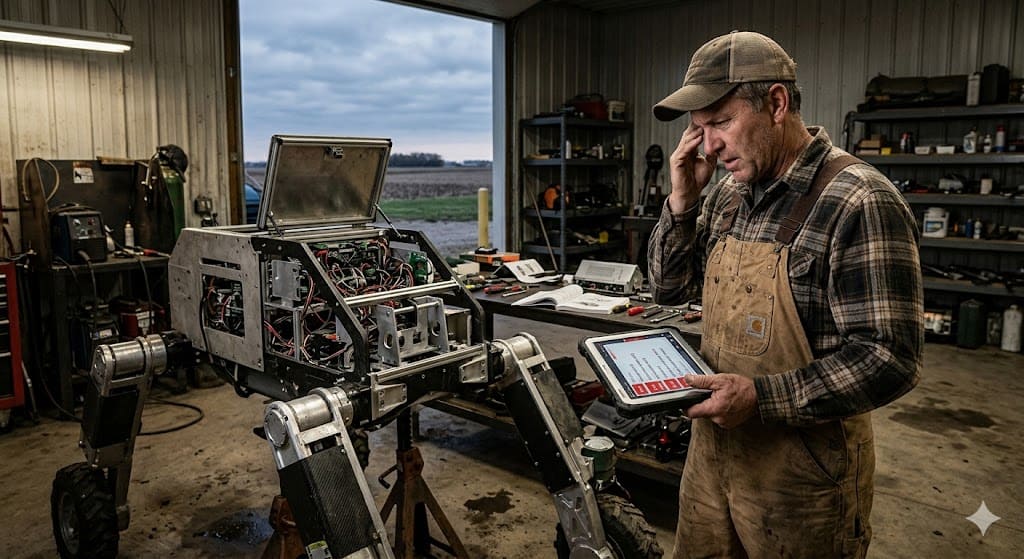
Specialized servicing requirements mean that breakdowns can result in prolonged downtime if qualified technicians or spare parts are not readily accessible. For time-critical operations like harvest, even a short equipment failure can have serious financial consequences.
Connectivity and Infrastructure
Many of the most advanced agricultural robotics applications depend on reliable GPS signals, high-speed internet connectivity, and robust digital infrastructure. Rural infrastructure limitations prevent farms in remote areas from fully utilizing these systems until connectivity gaps are addressed.
Adoption Barriers
Beyond the practical and financial obstacles, there are cultural and psychological barriers to farm automation adoption. Many experienced farmers are understandably cautious about the reliability and return on investment of new technology, particularly when their livelihoods depend on the decisions they make. Demonstrating consistent, measurable results in real farm environments, rather than controlled research settings, is essential to building the trust needed for broader adoption. Farmers and industry stakeholders often cite these concerns among the main disadvantages of farm robots, especially when systems are expensive or difficult to maintain.
Table: Benefits vs Challenges of Agricultural Robotics
| Benefits | How It Helps Farms | Challenges | Why It Can Be Difficult |
|---|---|---|---|
| Increased Efficiency | Robots can work 24/7 and complete tasks faster than manual crews | High Initial Costs | Advanced robotic systems often require major upfront investment |
| Reduced Labor Dependence | Helps farms cope with worker shortages and rising labor costs | Technical Complexity | Requires training, setup, and software/system integration |
| Improved Precision | Enables targeted planting, spraying, irrigation, and harvesting | Maintenance and Repairs | Specialized servicing and parts may not be easily available |
| Higher Crop Yields | Better timing and accuracy can improve output and quality | Connectivity and Infrastructure | Some systems depend on reliable internet, GPS, and digital tools |
| Sustainable Farming Practices | Reduces waste, chemical use, and water overuse | Adoption Barriers | Some farmers remain cautious about ROI and reliability |
| Better Data Collection | Supports smarter decisions through real-time field and livestock data | Learning Curve | Teams may need time to adapt to new technology and workflows |
How AI Is Powering Agricultural Robotics
AI in agricultural robotics is the engine that transforms a mechanical robot into an intelligent agricultural partner. Without AI, farm robots would be little more than programmable machines following fixed instructions. With it, they become adaptive systems capable of sensing, interpreting, and responding to the endlessly variable conditions found in real farming environments.
At the same time, AI in agriculture robotics is becoming one of the most important drivers of innovation across the industry. Machine learning in farming allows robotic systems to improve their performance over time. A robotic harvester that uses computer vision agriculture tools to assess fruit ripeness, for example, becomes progressively more accurate as it processes more images and receives feedback on its decisions. This continuous improvement loop is what makes AI-powered agricultural systems so much more valuable than static automation tools.
Computer vision agriculture applications are particularly transformative. Smart agriculture AI systems can identify individual crop varieties, detect early signs of disease or pest damage, distinguish weeds from desirable plants with extraordinary accuracy, and assess the structural health of entire fields from aerial imagery. Predictive farm analytics powered by machine learning can anticipate yield outcomes, flag emerging problems before they become critical, and recommend management actions tailored to the specific conditions of each field.
AI in agricultural robotics is also enabling autonomous decision-making at a level of sophistication that was unimaginable just a decade ago. Robots can now navigate complex, unstructured environments like orchards and greenhouse corridors without pre-programmed maps, adapting in real time to obstacles, changes in terrain, and variable plant spacing.
Agricultural Robotics and Precision Agriculture
Agricultural robotics and precision agriculture are deeply intertwined concepts. Precision agriculture robotics rests on the principle of delivering the right input, in the right place, at the right time, in the right quantity, and robotics serves as the execution layer that makes this principle operational at scale.
In practical terms, this is where robotics in precision farming becomes so valuable. Precision agriculture robotics leverages GPS, field mapping, sensor-based operations, and variable rate application technologies to ensure that location-specific data informs every action taken on a farm. Rather than treating an entire field as a uniform unit, precision farming robots respond to the actual variability that exists across a farm’s terrain, soil conditions, and crop health.
Targeted spraying based on real-time weed and disease maps, variable seed rates matched to soil fertility zones, and sensor-guided irrigation all exemplify precision agriculture in action, and they all rely on robotic systems to deliver them effectively. Smart farming technology that integrates robotics with precision agriculture principles is producing some of the most significant productivity and sustainability gains in the industry today. For more foundational knowledge on this approach, you can read about precision agriculture.
This relationship between robotics and smart agriculture is one of the main reasons modern farms are shifting toward data-first decision-making and highly localized field management.
The Future of Agricultural Robotics
The future of agricultural robotics points toward systems that are smarter, more autonomous, more affordable, and more deeply integrated with the broader farm management ecosystem. Several trends are shaping the future farming technology landscape in ways that will open robotic solutions to a much wider range of operations.
As manufacturing volumes increase and component costs decline, more affordable robots for small farms are becoming a realistic prospect. Robot-as-a-service business models, where farmers pay for the use of robotic equipment on a per-hour or per-acre basis rather than purchasing outright, are emerging as a pathway to access for smaller operations that cannot justify the capital investment.
Swarm robotics, where large numbers of small, collaborative robots work together on tasks like seeding, weeding, or harvesting, represents one of the most exciting frontiers in smart farming innovations. Rather than relying on a single large and expensive machine, swarm systems distribute the work across many low-cost units, improving resilience and enabling finer-grained operations. Cloud-connected farm systems will allow robotic platforms to share data, receive software updates, and coordinate operations in real time, creating farm environments that are continuously learning and improving.
Autonomous harvesting at scale, multi-task robots capable of switching between functions depending on the season, and robotics for climate-smart agriculture are all areas receiving significant research and commercial investment. Agricultural robotics trends suggest that within the next decade, the technology will shift from being a competitive advantage for early adopters to a baseline requirement for commercially viable farming operations.
Real-World Examples of Agricultural Robotics
The applications of agricultural robotics are no longer confined to research laboratories or pilot programs. Across the world, real-world agricultural robotics deployments are demonstrating the practical value of these systems at commercial scale.
These examples of agricultural robots include robotic fruit pickers used in strawberry, apple, and table grape operations, where labor shortages and harvesting windows make manual picking increasingly difficult to execute reliably. Autonomous tractors are operating on large-scale grain farms, reducing the per-acre cost of field operations while improving uniformity. AI spraying systems are being deployed across row crop and specialty crop environments, cutting herbicide use dramatically while achieving better weed control outcomes than conventional broadcast applications.
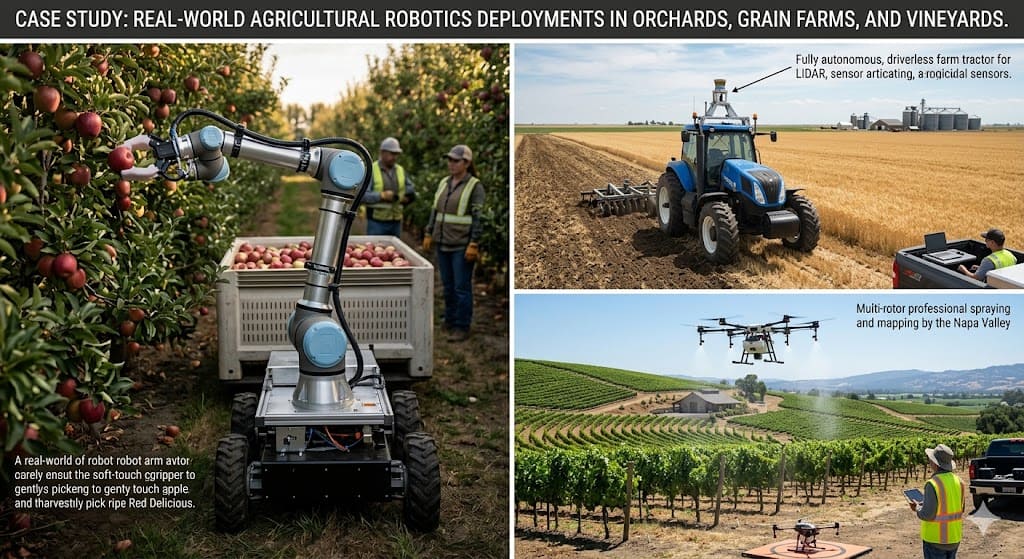
Dairy milking robots are now a mature technology in Europe and North America, with tens of thousands of systems in commercial operation. Drone crop scanners are being used by agronomists and farm managers as standard tools for field scouting and crop health assessment. These agricultural robotics applications demonstrate that this is not a speculative technology but a practical, deployable, and commercially validated suite of solutions.
Is Agricultural Robotics Worth It for Farmers?
Is agricultural robotics worth it? The answer depends significantly on farm-specific factors including farm size, crop type, prevailing labor costs, available infrastructure, and the realistic ROI of farm robotics for any given investment. Large farms operating at commercial scale in labor-scarce environments typically have the strongest case for early adoption, as the per-acre cost of robotic operations can be quickly offset by labor savings and yield improvements.
Smaller farms may find that a phased approach, beginning with lower-cost applications like drone monitoring or precision irrigation systems before moving to more capital-intensive robotic harvesting or autonomous traction equipment, allows them to build familiarity with the technology and demonstrate returns before committing to larger investments. The cost vs benefits of agricultural robots will look different for a 10,000-acre grain farm than for a 50-acre market garden, and any investment decision should be grounded in an honest assessment of local conditions and operational priorities.
Agricultural robotics is not a one-size-fits-all investment, but for many modern farms, it can deliver long-term gains in productivity, precision, and sustainability that are difficult to achieve through any other means. As the technology matures and financing options expand, the threshold at which robotics becomes economically justified will continue to fall.
Conclusion
Agricultural robotics is reshaping modern farming in ways that are both profound and accelerating. The combination of AI, precision sensing, autonomous navigation, and continuous data collection is enabling a new generation of farms that are more productive, more efficient, and more sustainable than anything previously possible. Adoption challenges, particularly around cost, technical complexity, and rural infrastructure, remain real, but the momentum behind the technology is undeniable and growing.
Farms that adapt early and build operational familiarity with these systems are likely to gain a measurable competitive edge as the technology becomes more integrated into mainstream agricultural practice. As costs continue to fall and capabilities continue to expand, agricultural robotics is on a clear trajectory from emerging innovation to essential infrastructure. The farms of the future will not look like the farms of the past, and agricultural robotics will be one of the primary reasons why.
As technology continues to evolve, agricultural robotics is likely to become a central part of the future of farming rather than a niche innovation.
Frequently Asked Questions About Agricultural Robotics
What is agricultural robotics?
Agricultural robotics refers to the use of robotic systems, combining AI, sensors, GPS, and automation, to perform tasks in farming environments such as planting, harvesting, spraying, monitoring, and livestock management. These systems can operate autonomously or semi-autonomously, reducing the need for manual labor while improving precision and consistency.
How are robots used in agriculture?
Robots are used across the entire agricultural workflow. They harvest fruits and vegetables, plant seeds with precision, monitor crop health from the air and ground, apply pesticides and fertilizers only where needed, milk dairy cattle, analyze soil conditions, and track livestock health, among many other applications.
What are the benefits of agricultural robotics?
The primary benefits include increased operational efficiency, reduced dependence on seasonal labor, improved planting and harvesting precision, higher crop yields, more sustainable use of water and chemicals, and better farm data collection for smarter decision-making.
What types of robots are used in farming?
Common types include autonomous tractors, robotic harvesters, weeding and spraying robots, agricultural drones, robotic milking systems, and seeding robots. Each type addresses a specific stage of the agricultural workflow.
Is agricultural robotics expensive?
Initial costs can be significant, with some advanced systems requiring substantial capital investment. However, long-term ROI through labor savings, yield improvements, and input cost reductions often justifies the expenditure, particularly on larger operations. Robot-as-a-service models are making access more feasible for smaller farms.
How does AI improve agricultural robotics?
AI enables robots to perceive their environment through computer vision, learn and improve through machine learning, make autonomous decisions in real time, and detect subtle signs of crop disease, pest activity, or ripeness that would be difficult for humans to identify consistently at scale.
Can small farms use agricultural robots?
Yes, though the type of robot and the scale of adoption may differ from large commercial operations. Drones, precision irrigation systems, and soil sensors represent relatively accessible entry points, while more capital-intensive systems may be better suited to phased adoption or service-based access models.
What is the future of robotics in agriculture?
The future points toward smarter, cheaper, and more autonomous systems that are accessible to a wider range of farms. Swarm robotics, cloud connectivity, multi-task robots, and deeper integration with farm management software are among the key trends shaping the next generation of agricultural automation.
Add Agri Opportunities as a preferred source on Google to see our latest blogs first.


It’s remarkable to pay a quick visit this site and reading the views of all friends about this
paragraph, while I am also keen of getting familiarity.