
Regenerative Agriculture: The Future of Sustainable Farming and Soil Health

For decades, conventional agriculture has prioritized yield above all else, maximizing output through synthetic fertilizers, heavy tilling, and monoculture planting. While this approach fed billions, it came at a steep cost: degraded soil health, depleted aquifers, collapsed biodiversity, and a spiraling dependency on chemical inputs. Today, farmers, researchers, agri-investors, and policymakers are turning toward a more thoughtful and restorative path, one that works with nature rather than against it. That path is called regenerative agriculture, and it represents one of the most significant shifts in how humanity thinks about food, land, and long-term survival.
Regenerative agriculture is not simply a trend or a buzzword. It is a deeply practical, scientifically grounded, and economically compelling approach to farming that prioritizes restoring ecosystems while still producing food and profit. It draws on centuries of indigenous knowledge, modern agroecology, and cutting-edge soil science from institutions like USDA NRCS to offer farmers a way forward that builds rather than depletes. Whether you are a smallholder cultivating a few acres, a large-scale commercial operator, or an investor looking for long-term agricultural stability, understanding regenerative farming is no longer optional, it is essential.
What Is Regenerative Agriculture? A Clear Definition
At its core, regenerative agriculture refers to a system of farming principles and practices that rehabilitate and enhance the entire ecosystem of a farm. Unlike sustainable farming, which aims to maintain current conditions without further degradation, regenerative agriculture actively seeks to improve and restore the natural systems that underpin food production. The goal is to leave the land in better condition than it was found, season after season, year after year.
This philosophy is rooted in agroecology, the scientific study of how ecological processes can be applied to agricultural systems. Agroecology as a scientific discipline considers a farm not as an isolated production unit but as a living, dynamic ecosystem embedded within a broader landscape. By applying agroecological principles, regenerative farmers manage their land holistically, integrating soil biology, water cycles, plant diversity, animal behavior, and human communities into a single, interconnected system.
Holistic land management is one of the foundational concepts in regenerative agriculture. Originally developed and popularized by ecologist Allan Savory, holistic management encourages farmers to plan land use decisions based on the whole system rather than individual components. In practice, this means considering how livestock grazing affects soil compaction, how soil compaction affects water retention in soil, how water retention affects plant growth, and how all of these factors circle back to farm profitability and ecosystem health. As a result, every decision is evaluated through this wider lens, thereby leading to more thoughtful, adaptive, and ultimately more effective farming.
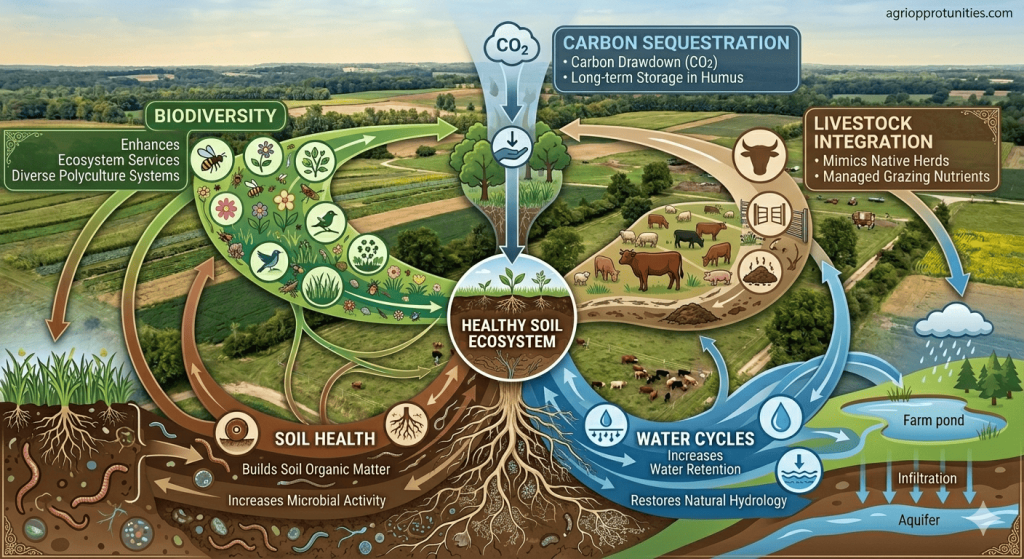
The Foundation of Regenerative Agriculture: Soil Health
If there is one concept that sits at the very heart of regenerative agriculture, it is soil health. Healthy soil is not simply dirt. Rather, it is a living, breathing ecosystem teeming with billions of microorganisms, bacteria, fungi, protozoa, nematodes, earthworms, and countless other organisms, all working in intricate symbiosis with plant roots, organic matter, air, and water. In fact, this underground world is responsible for nutrient cycling, disease suppression, water filtration, and carbon storage, as well as many other vital functions.
1. How Conventional Agriculture Damages Soil Health
Conventional agriculture has badly damaged this underground ecosystem. Repeated tilling destroys soil structure and kills fragile fungal networks called mycorrhizae, which plants depend on for nutrient uptake. Heavy use of synthetic nitrogen fertilizers disrupts microbial communities and acidifies soil over time. Pesticides and herbicides, while targeting pests and weeds above the surface, simultaneously harm the beneficial organisms below it. The result is soil that becomes increasingly dependent on external chemical inputs just to maintain productivity, a vicious cycle that degrades the land while increasing farmer costs.
2. How Regenerative Agriculture Feeds the Soil, Not Just the Plant
Regenerative farmers reverse this cycle by feeding the soil rather than just the plant. Composting and organic matter are central to this approach. By returning crop residues, animal manures, food scraps, and plant material to the soil through composting, farmers continuously replenish the organic matter that microorganisms need to thrive. As organic matter increases, so does the soil’s ability to hold moisture, resist erosion, cycle nutrients naturally, and support diverse plant and animal life. Over time, healthy soil becomes less dependent on inputs and more capable of sustaining itself, a transition that reduces costs, increases resilience, and restores long-term land value.
3. The Biological Cascade of Soil Fertility
Understanding how regenerative agriculture improves soil fertility begins with understanding this biological cascade. When soil biology is functioning properly, nutrients cycle efficiently and become available to plants in the right forms and at the right times. Nitrogen-fixing bacteria convert atmospheric nitrogen into plant-usable forms. Mycorrhizal fungi unlock phosphorus from soil minerals. Diverse microbial communities produce plant growth hormones. The result is a natural fertility system that, once restored, can match or exceed the productivity of chemically managed land, often with significantly lower input costs.
4. Soil Conservation Methods in Agriculture
Among the most effective soil conservation methods in agriculture is keeping the ground covered with living plants or residue. In doing so, this approach prevents erosion, maintains soil structure, and preserves the biological communities that drive fertility principles that, in turn, form the backbone of regenerative systems.
Cover Cropping in Regenerative Agriculture:
One of the most widely adopted practices in regenerative farming is cover cropping. Cover crops provide ecological services to the soil and surrounding ecosystem, rather than primarily serving as a harvestable crop. Common cover crops include legumes like clover, vetch, and field peas; grasses like rye, oats, and barley; and brassicas like radishes and turnips. Each brings different benefits depending on what the soil and farming system need.
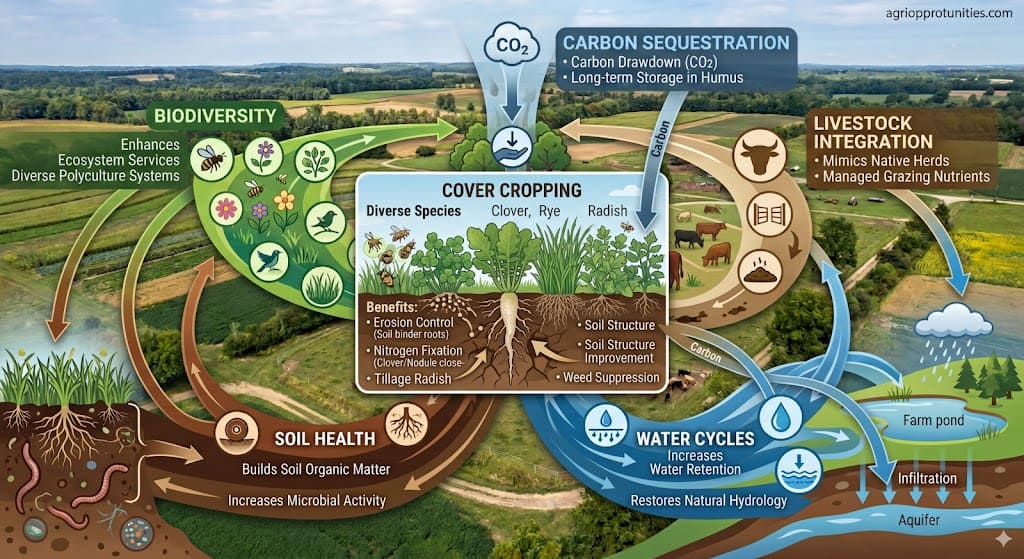
Cover cropping benefits are extensive and well-documented. Cover crops protect bare soil from erosion, especially in regions with intense seasonal weather. Leguminous varieties fix atmospheric nitrogen, acting as natural fertilizer. Deep-rooted crops like tillage radishes break through soil compaction, improving water infiltration. Cover crops also suppress weeds by outcompeting them for light, moisture, and nutrients, reducing herbicide dependency. Finally, when terminated, their biomass adds organic matter to the soil, feeding the microbial communities that drive fertility.
For small farms in particular, cover cropping is among the most accessible and impactful regenerative farming practices available. The seeds are relatively affordable, the management requirements are modest, and the long-term benefits to soil health, input savings, and crop productivity are substantial. Consequently, Farmers who integrate cover cropping into their rotation consistently report improved soil structure, better water-holding capacity, and healthier cash crops in subsequent seasons. Research from the Sustainable Agriculture Research & Education (SARE) program provides extensive guidance on selecting and managing cover crops for different farming systems.
Crop Rotation Techniques in Regenerative Farming:
Closely related to cover cropping is the practice of crop rotation, the deliberate sequencing of different plant species across a field over time. Crop rotation techniques have been used by farmers for thousands of years, and modern research continues to confirm their profound benefits for soil health, pest management, and long-term productivity.
1. The Problem with Monoculture Farming
Monoculture farming, growing the same crop on the same land year after year, creates a range of compounding problems:
- Pest and disease pressure: Pest and disease populations that target a specific crop build up rapidly in the soil and surrounding environment.
- Nutrient depletion: Nutrient profiles become imbalanced as the same elements are extracted repeatedly while others go unused.
- Weed adaptation: Weed communities adapt and thrive in predictable growing conditions.
- Loss of soil biodiversity: The biological diversity of the soil ecosystem collapses, because different plant species feed different communities of microorganisms, and a single crop species simply cannot support the rich microbial diversity a healthy soil requires.
2. How Crop Rotation Restores Balance
Crop rotation disrupts all of these patterns simultaneously. Rotating between grain crops, legumes, root vegetables, and cover crops:
- Keeps pest and disease cycles from completing
- Naturally reduces weed pressure
- Ensures a wide range of nutrients are both consumed and returned to the soil
Different root architectures at varying soil depths work and maintain the physical structure of the soil across layers, not just at the surface. The diversity of root exudates, the chemical compounds that plant roots secrete into the surrounding soil, feeds a much broader and more robust microbial community, which in turn supports stronger plant growth across all crops in the rotation.
3. Adaptive Rotation Strategies
In a regenerative agriculture system, crop rotation is not a fixed formula but an adaptive strategy. Farmers observe their soil, monitor pest pressure, analyze nutrient data, and design rotations that respond to the specific conditions and goals of their land. This kind of responsive, knowledge-intensive management distinguishes regenerative and sustainable farming from more rigid, input-dependent approaches.
Livestock Integration in Regenerative Agriculture
Perhaps one of the most transformative — and sometimes misunderstood — practices in regenerative farming is the deliberate integration of livestock into cropping systems. In contrast, conventional agriculture typically separates livestock and crop production into distinct industrial systems, each with its own set of environmental problems: factory-farmed animals confined in concentrated feeding operations on one end, and vast monoculture crop fields stripped of animal life on the other. By contrast, regenerative agriculture reunites these systems in a way that mirrors how natural grassland ecosystems function.
1. What Is Livestock Integration in Regenerative Agriculture?
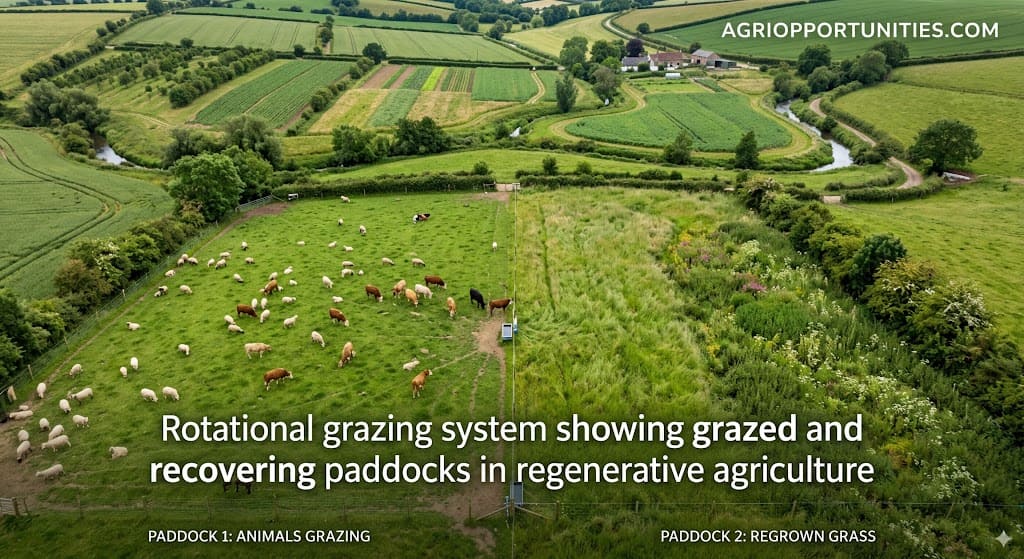
Livestock integration in regenerative agriculture, often practiced through managed rotational grazing or holistic planned grazing, uses the movement of animals across a landscape to stimulate plant growth, fertilize soil, and drive biological cycling. Herbivores like cattle, sheep, and goats, when grazed in tight herds and moved frequently across a landscape, mimic the behavior of wild ungulate herds that once roamed grasslands around the world. Their hooves break up soil crusts and press organic matter and seeds into the ground. Their dung and urine deposit rich concentrations of nutrients directly onto the pasture. By grazing plants down to a certain level and then moving on, they trigger vigorous regrowth that builds deeper, more extensive root systems over time.
2. Regenerative Grazing Explained: A Core Practice in Carbon Farming
This approach, often referred to as regenerative grazing, represents a fundamental shift from conventional livestock management. Rather than confining animals or leaving them on the same pasture indefinitely, regenerative grazing moves them strategically to mimic natural herd movements. The impact on soil health is measurable and significant. Rotationally grazed pastures consistently show higher levels of organic matter, greater water retention in soil, richer microbial diversity, and more robust plant communities than either continuously grazed or ungrazed paddocks.
3. Benefits of Integrating Livestock and Crops
The integration of animals into cropping systems, using livestock to graze cover crops, clean up crop residues, and fertilize fields between seasons, further compounds these benefits while reducing feed costs and synthetic input requirements. For farmers managing mixed operations, this integration often represents the most efficient and ecologically sound use of their land.
Carbon Sequestration in Agriculture: The Climate Connection
One of the most compelling arguments for widespread adoption of regenerative agriculture, particularly for policymakers, investors, and climate-conscious consumers, is its potential role in carbon sequestration in agriculture. The atmosphere currently contains excess carbon dioxide, primarily from the burning of fossil fuels and, significantly, from decades of industrial land management that has released enormous quantities of carbon stored in soils and vegetation. Regenerative agriculture offers a pathway to reverse part of this process by drawing carbon back out of the atmosphere and storing it safely in the soil.
1. How Plants Capture Carbon
Photosynthesis drives this process. First, plants absorb carbon dioxide from the air and convert it into sugars, some of which they pump directly into the soil through root exudates to feed microbial communities. Then, in healthy, biologically active soil with high organic matter content, the soil incorporates much of this carbon into stable compounds, humus, fungal biomass, and mineral-associated organic matter, where it can remain stored for decades or even centuries.
2. Building Soil Carbon Through Regenerative Practices
By building organic matter, reducing tillage, maintaining living root cover year-round, and integrating diverse vegetation including trees and perennial plants, regenerative farmers can significantly increase the rate at which their land captures and retains atmospheric carbon.
3. Climate Benefits Beyond Carbon Storage
The benefits of regenerative agriculture for climate change extend beyond simple carbon math. Healthy soils with high organic matter also reduce nitrous oxide emissions, a greenhouse gas far more potent than carbon dioxide, by supporting efficient nitrogen cycling that minimizes losses through volatilization and denitrification. Diverse, cover-cropped fields require fewer synthetic fertilizers, whose production is itself enormously energy-intensive and carbon-costly. Resilient, biologically active soils are far better equipped to handle the increasingly extreme weather events, floods, droughts, heat waves, that climate change is making more frequent and severe.
4. The Carbon Credit Opportunity
For agricultural investors and agri-business operators, the carbon story has direct financial implications. Carbon credit markets are rapidly expanding, and farms that can demonstrate measurable increases in soil organic carbon are increasingly able to generate verified carbon credits that they can sell to corporations and governments working to offset their emissions. This represents an emerging revenue stream that, while still maturing, is beginning to offer real financial incentives for the transition to regenerative practices.g, is beginning to offer real financial incentives for the transition to regenerative practices.
Permaculture Farming: Designing for Permanence
Within the broader constellation of regenerative approaches, permaculture farming occupies a unique and visionary space. Developed in the 1970s by Australian ecologists Bill Mollison and David Holmgren, permaculture, a contraction of “permanent agriculture” and “permanent culture”, is a design philosophy that seeks to create agricultural and human systems that are as self-sustaining, productive, and ecologically integrated as natural ecosystems.
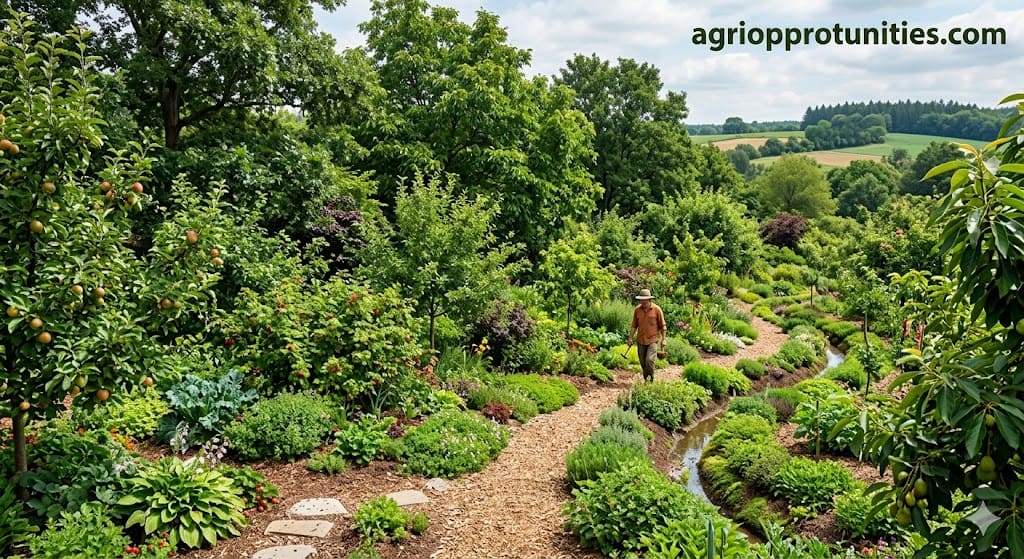
Permaculture farming follows a set of ethics and principles that prioritize care for the earth, care for people, and fair sharing of resources. In practical terms, a permaculture farm maximizes the relationships between its components, water, soil, plants, animals, structures, and people, so that the outputs of one element become the inputs of another, minimizing waste and external dependency. A classic permaculture design might integrate an orchard with bee-keeping and poultry, using the chickens to manage pests and fertilize the orchard floor while the bees pollinate the fruit trees. Farmers harvest water from rooftops into swales and ponds, which then irrigate the land during dry periods while creating aquatic habitat that supports biodiversity on farms.
Although permaculture is sometimes associated exclusively with small-scale homesteads and bAlthough some people associate permaculture exclusively with small-scale homesteads and backyard gardens, forward-thinking farmers are increasingly applying its principles at the scale of commercial agriculture. These farmers adopt food forests, keyline water design, integrated pest management, and polyculture planting, all rooted in permaculture thinking, because they recognize that ecological complexity is not an obstacle to productivity but a driver of it. The diversity of crops, niches, and biological relationships in a well-designed permaculture system makes it inherently resilient to the shocks, weather events, pest outbreaks, market fluctuations, that can devastate simpler, more uniform farming systems.
Regenerative Agriculture vs Conventional Farming: An Honest Comparison
For farmers and business owners evaluating whether to transition their operations, the question of regenerative agriculture vs conventional farming is not merely philosophical, it is deeply practical. Each system has its strengths and weaknesses, and an honest comparison is necessary for informed decision-making.
Conventional farming excels at short-term, high-volume production on a large scale. Synthetic fertilizers, pesticides, herbicides, and heavy machinery enable it to generate consistent, predictable yields that meet the volume demands of commodity markets. The system optimizes for output in a world where cheap inputs, stable climate, and degraded-but-functional land were taken for granted. Government policies in most countries deeply entrench and strongly support the infrastructure, supply chains, financing mechanisms, and knowledge systems of conventional agriculture.
Regenerative farming, by contrast, requires a greater initial investment in knowledge, observation, and sometimes transitional costs as soil biology recovers and input dependencies are reduced. Yields may dip temporarily during the transition period, typically one to three years, before soil health improvements translate into stable and eventually superior productivity. The management requirements are also more complex and site-specific, demanding a deeper understanding of local ecology, soil biology, and adaptive planning than the more formulaic approaches of conventional systems.
However, the long-term economic and ecological case for regenerative agriculture is compelling. Studies from organizations like the Rodale Institute consistently show that well-managed regenerative farms achieve lower input costs, greater yield stability across variable weather conditions, higher soil organic matter, stronger biodiversity on farms, and better long-term land value than their conventional counterparts. Premium markets for regeneratively produced food are growing rapidly, allowing farmers to command higher prices for products certified or recognized under various regenerative standards. And as regulatory and market pressure around environmental sustainability increases, farms that have already transitioned will find themselves significantly better positioned than those that have not.
Comparison Table: Regenerative Agriculture vs. Conventional Agriculture
| Aspect | Regenerative Agriculture | Conventional Agriculture |
|---|---|---|
| Soil Management | Builds soil organic matter, minimal tillage, living roots year-round | Frequent tillage, bare fallow periods, soil organic matter declines over time |
| Input Dependency | Low external input dependency; relies on biological cycles and on-farm resources | High dependency on synthetic fertilizers, pesticides, and herbicides |
| Water Management | High water retention in soil; reduced irrigation needs; improved infiltration | Lower water-holding capacity; higher runoff and erosion risk |
| Biodiversity | High crop, livestock, and habitat diversity; supports pollinators and beneficial insects | Low diversity; monoculture cropping; reduced habitat for wildlife |
| Climate Impact | Net carbon sequestration; reduced nitrous oxide emissions | Net carbon emissions; high fossil fuel and synthetic input footprint |
| Yield Stability | More stable across variable weather conditions; resilience to drought and flood | Greater volatility; higher vulnerability to extreme weather events |
| Profitability | Lower input costs; premium market access; long-term land value appreciation | High input costs; commodity price exposure; declining margins over time |
| Knowledge Requirements | High; observation-intensive, adaptive management | Moderate; follows standardized protocols and input recommendations |
Biodiversity on Farms:
One of the most underappreciated dimensions of regenerative agriculture is its emphasis on biodiversity, not just of crops, but of insects, birds, soil organisms, wild plants, and entire ecosystems across the farm landscape. Biodiversity on farms is not merely an aesthetic or conservation concern. It is a fundamental driver of agricultural productivity, resilience, and sustainability.
1. Why Biodiversity Matters in Regenerative Agriculture
A biologically diverse farm is a more stable and productive farm. Diverse plant communities support a wider range of beneficial insects, including pollinators like bees, butterflies, and hoverflies, which are essential for the production of fruits, vegetables, and many other crops. Predatory insects, spiders, and birds attracted by hedgerows, wildflower strips, and diverse vegetation provide natural pest control, reducing or eliminating the need for chemical pesticides. Diverse root systems at different depths explore more of the soil profile, accessing nutrients and water more efficiently and maintaining soil structure across layers. A diverse microbial community in the soil is more resilient to disruption and more capable of supporting robust plant growth than a monoculture of soil organisms dependent on chemical stimulation.
2. Biodiversity as a Pillar of Sustainable Food Systems
Sustainable food systems, those capable of feeding communities reliably over the long term, depend fundamentally on this kind of ecological diversity. The industrial food system’s reliance on a tiny number of crop varieties, grown in enormous monocultures and protected by vast quantities of chemicals, represents a profound vulnerability. A single new pest or pathogen, a single extreme weather event, or a single supply chain disruption can devastate harvests across vast regions. Biodiversity is the insurance policy against these risks, and regenerative agriculture is its most practical expression in a farming context.
3. Ecosystem Restoration in Farming Through Regenerative Practices
Ecosystem restoration in farming goes hand in hand with biodiversity. Many regenerative farmers are actively restoring native vegetation along field margins, waterways, and hillsides, not just to benefit wildlife but because these restored habitats provide direct agronomic services: erosion control, water filtration, beneficial insect habitat, windbreaks, and local climate regulation.
A4. groforestry for Soil Improvement
The integration of trees into farming systems, known as agroforestry, adds multiple layers of ecological function and economic value, from fruit and timber to shade, fodder, and carbon storage. Agroforestry for soil improvement is particularly powerful: tree roots penetrate deep into the subsoil, bringing up nutrients that become available to crops through leaf litter and root turnover. The perennial nature of trees means they build soil organic matter continuously, without the disturbance of annual tillage, making agroforestry one of the most effective long-term strategies for soil regeneration.
Water Retention in Soil: Building Resilience Against Drought and Flood
Climate variability is becoming one of the most significant challenges facing farmers around the world. More intense droughts, more erratic rainfall, more severe floods, and more extreme temperature swings are already affecting agricultural productivity across every continent. In this context, the ability of a farm to manage water efficiently, capturing it when it falls, storing it in the soil, and releasing it gradually, is becoming a critical measure of agricultural resilience.
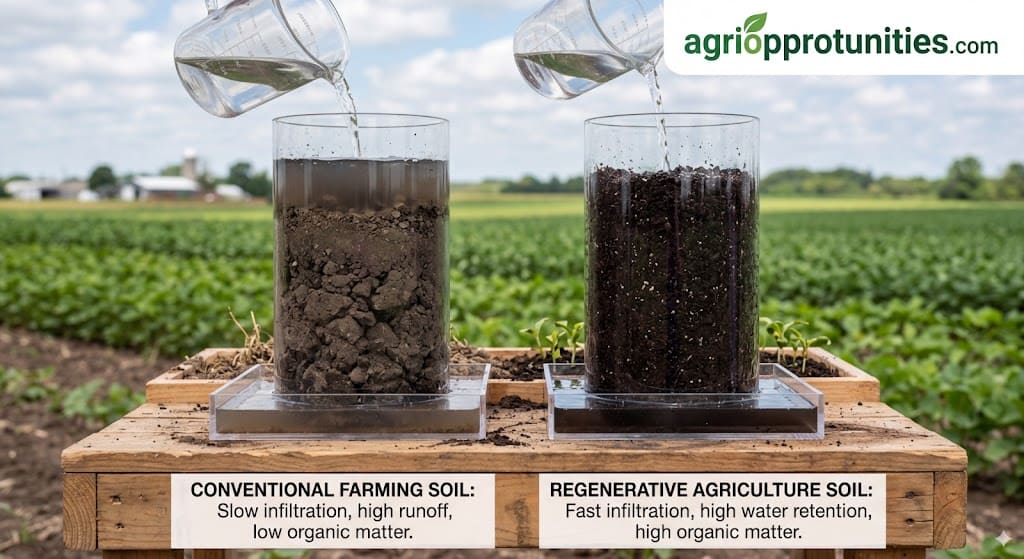
Regenerative agriculture dramatically improves water retention in soil through multiple reinforcing mechanisms. High organic matter content, the result of years of composting, cover cropping, and biological activity, acts like a sponge, allowing soil to absorb and hold many times more water than compacted, low-organic-matter soil. Mycorrhizal fungal networks create microscopic channels and aggregates in the soil that improve infiltration and reduce surface runoff. Minimal tillage preserves the physical structure of these aggregates, preventing the compaction that turns fields into impermeable surfaces during heavy rain. And diverse, deep-rooted vegetation, perennial grasses, shrubs, trees, and interplanted crops, pulls water deep into the soil profile, recharging groundwater reserves while preventing waterlogging near the surface.
The practical implications for farmers are enormous. A regeneratively managed field absorbs rainfall more rapidly and completely, reducing runoff and the risk of flooding in heavy rain events. During drought, the same field draws on stored soil moisture for much longer, keeping crops alive and productive when neighboring conventionally managed fields are showing stress. Over time, this improved water management translates into reduced irrigation dependency, lower pumping costs, and greater yield stability across all weather conditions, a combination of benefits that is becoming increasingly valuable as climate unpredictability grows.
Regenerative Farming Practices for Small Farms
For smallholder farmers, who collectively manage more than 70% of the world’s farmland and produce a significant share of global food, regenerative agriculture is not a luxury reserved for large, well-capitalized operations. In fact, many of the core practices of regenerative farming are ideally suited to the scale, flexibility, and community orientation of small-scale agriculture. Farmers can implement regenerative farming practices for small farms incrementally, with minimal upfront investment, and often deliver measurable results within the first one to two seasons.
Beginning with soil health observation, simply assessing the color, structure, smell, and biological activity of one’s soil, costs nothing but attention. Starting a simple compost system using on-farm organic waste, planting a modest cover crop after the main harvest, adding a rotation of legumes to an existing grain sequence, or reducing tillage depth and frequency are all practices that small farmers can begin immediately. Each small change builds on the last, gradually shifting the biological balance of the farm toward greater health and self-sufficiency.
Small-scale farmers also often have natural advantages in regenerative agriculture that larger operations lack. Their intimate knowledge of their specific land, their ability to make nuanced management decisions on a daily basis, their flexibility to integrate mixed crops and livestock in complex arrangements, and their existing relationships with local markets and communities all align naturally with the observation-intensive, diversity-driven, and relationship-based character of regenerative systems. For small farmers willing to invest in learning and experimentation, regenerative agriculture offers a genuine path toward reduced input costs, improved land productivity, climate resilience, and access to growing premium markets for sustainably produced food. Organizations like the National Young Farmers Coalition provide valuable resources and networks for small-scale farmers transitioning to regenerative practices.
Sustainable Food Systems and the Bigger Picture
Ultimately, regenerative agriculture is not just about individual farms. It is about the architecture of the entire food system, how food is grown, processed, distributed, consumed, and how the waste from that system flows back to the land. Building truly sustainable food systems requires regenerative principles to be applied not only at the farm level but across supply chains, policy frameworks, financial systems, and cultural norms around food.
Agroecology provides the conceptual framework for this broader transformation. By treating food systems as complex, adaptive social-ecological systems, rather than as mechanical production machines, agroecology encourages farmers, consumers, governments, and businesses to think in terms of relationships, cycles, and long-term wellbeing rather than short-term extraction and efficiency. This shift in thinking is already underway in many parts of the world, driven by a growing recognition that the industrial food system’s externalized costs, environmental degradation, public health impacts, rural poverty, climate emissions, are no longer sustainable or politically tolerable.
For agri-investors and business owners, this transition represents not only a risk to be managed but an opportunity to be seized. The market for regeneratively and sustainably produced food is growing rapidly across global consumer markets. Institutional investors are increasingly incorporating environmental, social, and governance criteria into agricultural investment decisions. Governments in Europe, North America, Australia, and parts of Asia are beginning to redirect agricultural subsidies toward environmental outcomes, creating new financial incentives for regenerative transition. And the convergence of digital farming tools, soil sensors, satellite imagery, carbon monitoring, with regenerative practices is creating new possibilities for scalable, data-driven sustainable farming that appeals to a technology-oriented investment community.
Modern Technology in Regenerative Farming
Regenerative agriculture and modern technology are not mutually exclusive. In fact, some of the most exciting developments in farming come from the intersection of ecological farming principles with cutting-edge agricultural technology. Two areas where this convergence is particularly powerful are agricultural robotics and modern agriculture techniques.
Agricultural Robotics
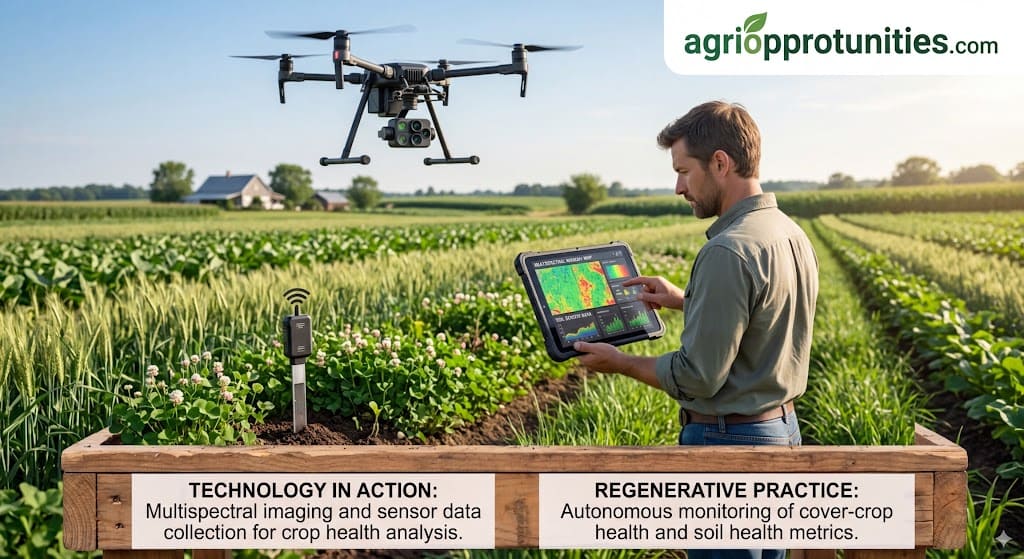
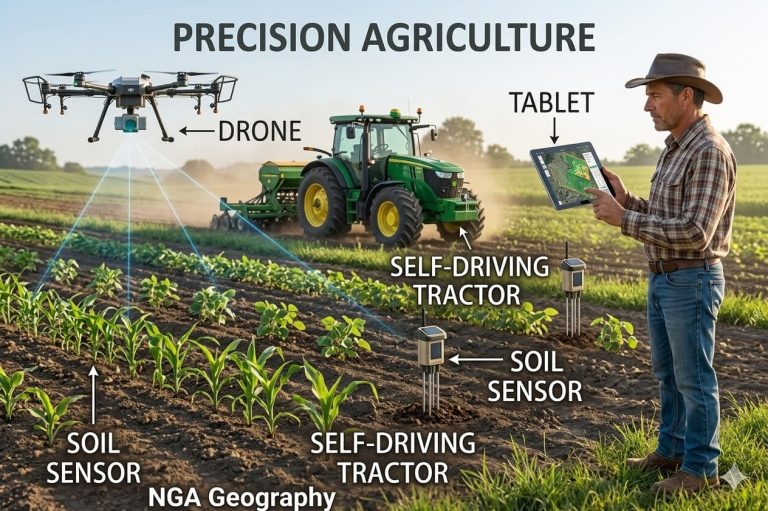
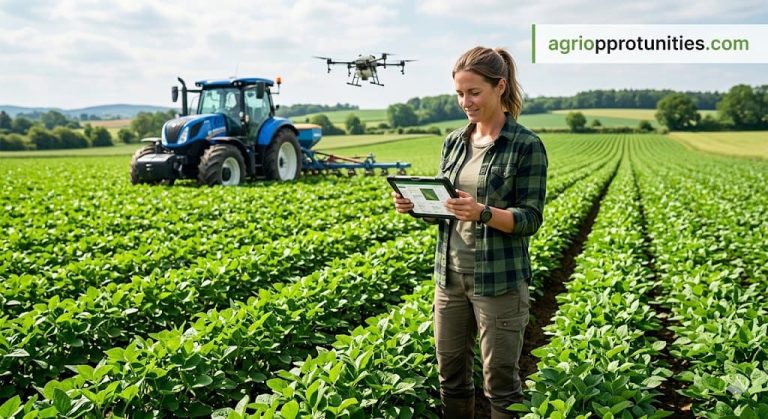
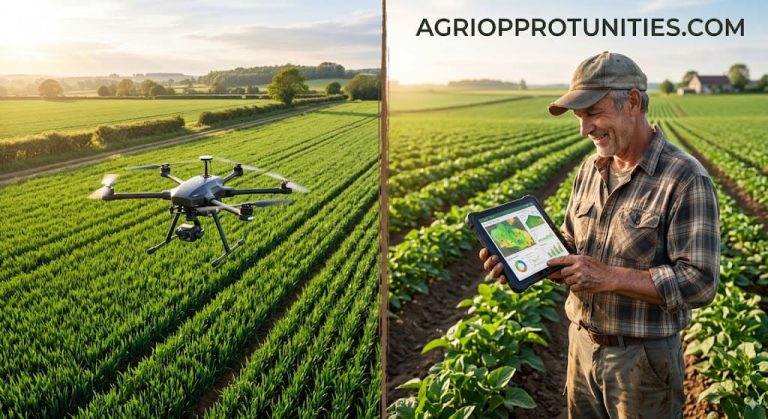
Agricultural robotics is transforming how farmers monitor crops, manage soil health, and implement regenerative practices. From autonomous tractors that reduce soil compaction through precise navigation to robotic weeders that eliminate the need for chemical herbicides, robotics enables regenerative farmers to scale their operations while maintaining ecological integrity. Drones equipped with multispectral cameras allow farmers to monitor cover crop establishment, track soil moisture variability, and assess plant health without walking every field, freeing up time for the strategic decision-making that regenerative systems require.
Modern Agriculture Techniques
Similarly, modern agriculture techniques such as precision irrigation, soil sensor networks, and farm management software provide regenerative farmers with the data they need to fine-tune their practices. Variable-rate technology allows for targeted compost application where soil organic matter is lowest. Soil moisture sensors help optimize grazing rotations by indicating when paddocks have recovered sufficiently. And farm management platforms track the complex rotations, cover crop sequences, and livestock movements that make regenerative systems work, turning what could be an overwhelming amount of information into actionable insights.
| Technology | Role in Regenerative Agriculture | Key Benefit |
|---|---|---|
| Agricultural Robotics | Autonomous tractors, robotic weeders, drones for crop monitoring | Reduces soil compaction, eliminates herbicide use, enables precise data collection |
| Precision Irrigation | Drip systems, soil moisture sensors, weather-integrated controllers | Maximizes water efficiency, supports healthy soil biology, reduces runoff |
| Farm Management Software | Data tracking for rotations, grazing plans, carbon accounting | Simplifies complex regenerative management, enables carbon credit verification |
| Soil Sensor Networks | Real-time monitoring of moisture, temperature, biological activity | Guides irrigation and grazing decisions with field-level precision |
Getting Started: A Practical Roadmap for Regenerative Transition
For farmers and land managers ready to move from interest to action, the transition to regenerative agriculture need not be overwhelming. The most effective transitions begin not with a radical overhaul of the entire operation but with a careful, observational assessment of the current state of the land and a clear understanding of what outcomes are most important: soil health improvement, input cost reduction, biodiversity enhancement, carbon sequestration, market access, or some combination of all of these.
From that foundation, a practical starting point typically involves reducing or eliminating tillage on at least a portion of the farm, introducing a simple cover crop after the main harvest season, beginning a composting and organic matter management program, and developing a basic crop rotation that incorporates at least one legume and one diversity crop alongside the main cash crop. Where livestock are already part of the operation, exploring rotational grazing management, even at a basic level, can deliver rapid and visible improvements in pasture health and water retention.
As confidence and knowledge grow, farmers can layer in more complex practices. These include integrating livestock into cropping systems, planting perennial vegetation and agroforestry elements, establishing wildflower and native plant corridors, implementing keyline water harvesting, and building the biological monitoring systems needed to track progress and guide adaptive management. Additionally, connecting with regenerative farming networks, attending field days and workshops, and engaging with the growing body of scientific and practitioner literature on agroecology and holistic land management all accelerate the learning curve considerably.
The journey toward regenerative agriculture is not linear or without challenge, but for the vast majority of farmers who have made the transition, the destination, healthier soil, lower costs, greater resilience, and a farm that is genuinely improving over time, is profoundly worth the effort.
Conclusion: Farming With Nature, Not Against It
Regenerative agriculture, sustainable farming, and agroecology are converging into a powerful new paradigm for how humanity can feed itself without destroying the planetary systems on which all life depends. From the microscopic world of soil bacteria and mycorrhizal fungi to the sweeping scale of watershed management and global carbon cycles, these approaches recognize that agriculture and ecology are not opposites but partners, and that the health of one is inseparable from the health of the other.
Whether you are a farmer looking to reduce costs and build resilience, a researcher exploring the frontiers of soil science, a business owner seeking sustainable supply chains, or simply a curious person trying to understand where your food comes from and what kind of world it is creating, regenerative agriculture offers a framework that is scientifically rigorous, practically grounded, and genuinely hopeful. The soil beneath our feet, if we give it the chance, has an extraordinary capacity to heal, and in doing so, to help heal much of what ails our relationship with this remarkable planet.
One Comment