How to Write a Winning Statement of Purpose for Agriculture Graduate Programs


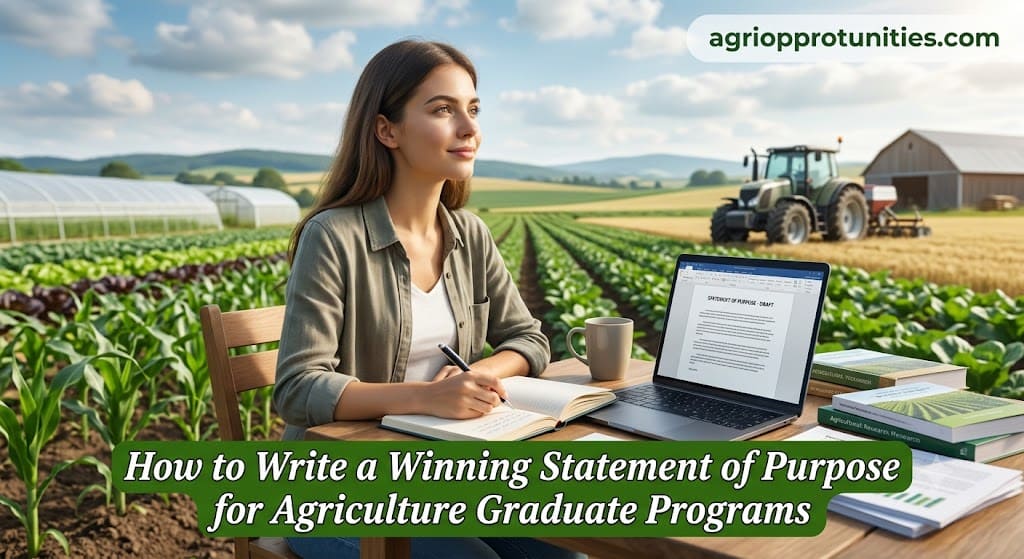
How to Write a Winning Statement of Purpose for Agriculture Graduate Programs
Structure, common mistakes, and what actually convinces an admissions committee reading an agriculture SOP.
Somewhere in an admissions office right now, a committee member is reading their fortieth statement of purpose of the week, and most of them sound the same. “Ever since I was a child growing up on my family’s farm, I have been fascinated by agriculture.” It’s not a bad sentence. It’s just one they’ve read a hundred times before, and by the third paragraph of vague passion and general enthusiasm, they’ve moved on mentally even if their eyes are still scanning the page. The SOPs that actually get remembered do something different — they read like a specific research proposal written by someone who already sounds like a colleague, not a hopeful applicant reciting the genre’s greeting-card opening lines.
What an SOP Actually Is (And Isn’t)
The single biggest misconception applicants carry into this document is treating it like an undergraduate personal essay — a story about who you are as a person. A graduate statement of purpose is, first and foremost, an academic document. Your audience is faculty, not an admissions generalist. They’re reading to answer a narrower, more practical question: can this specific person do the specific kind of research our specific department does, and do they know enough about us to make that judgment credibly?
Every SOP needs to cover three things clearly, in whatever order makes sense for your story. You must articulate what you’ve done and want to do — your accomplishments, research questions, and goals. Then explain why you’re motivated to do it here specifically. Finally, demonstrate how you plan to actually use this particular programme’s resources, faculty, and facilities to get there.
The Opening: Skip the Childhood Story
MIT’s own graduate communication guidance is blunt about this: avoid cliche openings like “ever since my childhood, I’ve been fascinated by…” A statement of purpose should tell your research story, not your life story.
Specific Opening:
Generic Opening:
The Section That Matters Most: Naming Names
Across nearly every piece of expert guidance on graduate statements of purpose, one specific recommendation comes up again and again — name two or three specific faculty members whose recent published work genuinely aligns with your interests, and explain precisely why.
This single element does more to separate a strong SOP from a generic one than almost anything else in the document, because it’s very difficult to fake. A vague reference to “your esteemed faculty” or “the excellent research opportunities at your university” signals, immediately and unmistakably, that an applicant hasn’t gone past the department’s homepage. Naming a specific professor, referencing a specific recent paper, and explaining a specific connection to your own proposed work signals the opposite.
How to Actually Do This Well
- Read the actual, recent publications of two or three faculty members — not just their faculty bio page.
- Identify a specific gap, method, or finding in their recent work that connects to what you want to research.
- Write a sentence or two that names them, references that specific work, and explains the connection in your own technical language.

Structuring the Middle: Your Research Narrative
- Your foundational research experience. What specific project, thesis, or fieldwork first exposed you to structured research methodology?
- A pivotal project or finding. Build around one specific piece of work — often a master’s thesis — described with enough technical specificity to demonstrate genuine expertise.
- The throughline to your proposed research. Connect your past work explicitly to what you want to study next, and specifically why this programme.
Common Mistakes That Weaken Otherwise Strong Applications
- Writing one generic statement and reusing it everywhere. If your statement could be sent to any programme without changing a word, it isn’t specific enough.
- Treating it as a first-draft document. Budget six to eight weeks for the full writing and feedback process.
- Letting someone else write it for you. Feedback is valuable; having someone else draft substantial portions undermines your own voice.
- Skipping the specific instructions. Every programme has its own requirements — read them carefully and follow them closely.
A Note for Agriculture Applicants Specifically
Agriculture as a field lends itself naturally to specific, vivid research narratives — a real field trial, a real data collection challenge, a real farming community context — precisely the kind of concrete detail that makes an SOP memorable rather than generic. Lean into that specificity rather than defaulting to broad statements about food security or sustainability that could apply to any applicant in the field. The version of your story that includes a specific instrument you used, a specific unexpected result you encountered, or a specific farming community’s challenge you’re trying to solve will always read stronger.

For currently open PhD, MS, and research assistantship positions where a strong SOP makes the difference, browse live agriculture scholarship listings on Agri Opportunities.
Frequently Asked Questions
How long should a statement of purpose for an agriculture graduate program be?
Most programs expect roughly 800 to 1,200 words, or about one to two pages, though you should always follow the specific length and formatting instructions given by each individual program rather than assuming a universal standard.
Is a statement of purpose the same as a personal statement?
Not quite. A statement of purpose is primarily an academic document focused on your research goals and program fit, while a personal statement leans more into your personal background and journey, though some programs blend the two or use the terms interchangeably.
Should I mention childhood experiences or a personal agricultural background in my SOP?
Only if it connects directly to your research narrative rather than serving as a generic opening. A brief, specific detail about a farming background can work well if it leads into your actual research interest, but cliche openings like a general childhood fascination with agriculture should be avoided.
How many faculty members should I mention in my statement of purpose?
Most admissions experts recommend naming two or three specific faculty members whose recent published work genuinely aligns with your research interests, rather than a long generic list or no names at all.
Add Agri Opportunities as a preferred source on Google to see our latest career guides and job listings first.