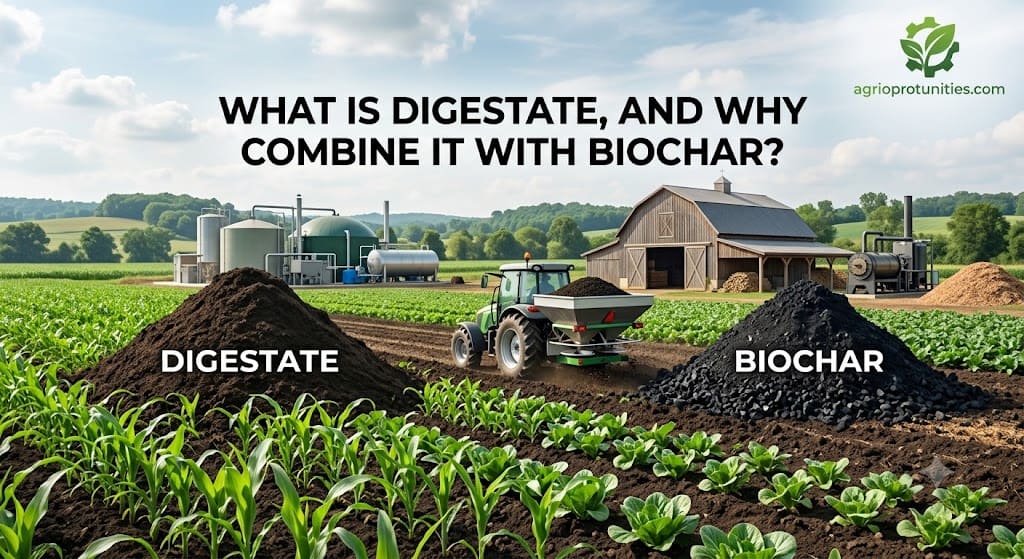
What Is Digestate, and Why Combine It With Biochar?

This is a genuinely personal piece for me to write, since digestate-biochar co-application sits at the center of my own PhD research proposal, built around exactly the DOC:NO₃⁻ stoichiometry concept covered earlier in this series. I want to walk through what digestate actually is, why using it alone creates real practical problems, and what a growing body of research suggests happens when you combine it with biochar instead.

What Digestate Actually Is
Digestate is the nutrient-rich material left over after anaerobic digestion — a process in which microorganisms break down organic waste (food scraps, animal manure, crop residue) in an oxygen-free environment specifically to produce biogas, a renewable energy source. Once the biogas is captured, what remains is digestate: a nitrogen-rich liquid or semi-liquid byproduct with genuine value as a fertilizer.
Why Digestate Is a Genuinely Promising Resource on Paper
Societies already generate enormous amounts of organic waste, including food waste, livestock manure, and agricultural residues. Instead of treating these materials as disposal problems, anaerobic digestion recovers their nutrient value and produces digestate for agricultural use. This circular approach—turning waste into a valuable farm input—has driven growing research and policy interest in digestate.
Why Applying Digestate Directly to Soil Can Be Challenging
Digestate offers clear benefits, but applying it directly to soil also creates practical challenges. Understanding these limitations helps explain why researchers increasingly study digestate alongside biochar rather than as a standalone soil amendment.
- Volume and Transport Costs — Digestate contains large amounts of water, so transporting enough material to deliver meaningful nutrient levels quickly becomes expensive, especially over long distances.
- Ammonia Loss and Odor — Direct application can release substantial amounts of ammonia, contributing to nitrogen losses and producing strong odors. This challenge also highlights the ammonia–nitrous oxide trade-off discussed earlier in this series.
- Greenhouse Gas Emissions — Applying digestate on its own can increase greenhouse gas emissions, making emission management a key focus of current research.
Why Biochar Alone Isn’t a Complete Answer Either
Given the earlier discussion of biochar, it might seem that biochar alone could solve these digestate challenges. However, research suggests the answer isn’t that simple. When applied on its own, biochar can reduce plant yields by retaining and immobilizing nitrogen. In other words, its strong ability to hold nitrogen—a valuable trait for limiting nutrient losses—can also restrict the nitrogen available to crops unless farmers pair it with an additional nitrogen source.
Why This Sets Up a Genuinely Complementary Pairing
This is exactly the logic behind combining the two materials: digestate supplies the nitrogen that biochar alone lacks, while biochar addresses digestate’s ammonia loss, odor, and emissions problems — each material’s strength compensating for the other’s specific weakness.
The Research Findings: What Co-Application Actually Does
A genuinely striking recent study on paddy soil tested different combinations of urea and digestate nitrogen substitution, all combined with biochar, against a conventional 100 percent urea control.
A Dramatic Reduction in Nitrous Oxide
Co-applying biochar and digestate reduced nitrous oxide (N₂O) accumulation by 44.99–80.39 percent compared with the conventional control. The researchers attributed this reduction primarily to lower soil nitrate concentrations and increased soil pH. These changes may influence the balance between N₂O production and reduction during denitrification, linking the findings to the DOC:NO₃⁻ stoichiometry discussed earlier in this series. Lower nitrate availability can alter denitrification dynamics, although the extent to which it promotes complete denitrification depends on other soil conditions and microbial processes.
The Specific Microbial Mechanism
The researchers also observed changes in the abundance or distribution of the nosZ gene, which encodes the enzyme responsible for reducing N₂O to nitrogen gas (N₂), the final step in denitrification. This finding suggests that biochar–digestate co-application may have enhanced the soil’s capacity to reduce N₂O further to N₂, rather than simply suppressing overall microbial activity. However, changes in nosZ abundance alone do not confirm that denitrification became more complete; direct measurements of microbial activity and nitrogen-gas fluxes would provide stronger evidence.
An Unexpected Bonus: Methane Reduction Too
Beyond its effects on N₂O, biochar increased the abundance of methanotrophic bacteria, which consume methane. The combined application of biochar and digestate also increased the abundance of nitrate-reducing bacteria associated with nitrite-dependent anaerobic methane oxidation. Sulfate-dependent and iron-dependent methane oxidation pathways may have contributed to the reduction in methane emissions as well. Together, these findings suggest that combining biochar with digestate could help mitigate two important greenhouse gases through distinct microbial pathways, although the contribution of each pathway requires further confirmation.
Field Evidence Beyond Rice: Swine Digestate Biochar in Temperate Crops
Research isn’t limited to paddy rice systems. A two-year field study in Lithuania tested biochar made specifically from swine digestate manure, applied to spring barley and pea crops, alongside varying rates of synthetic nitrogen fertilizer.
Consistent Emissions Reductions Across Gas Types
Biochar, whether combined with nitrogen fertilizer or applied alone, substantially lowered carbon dioxide, nitrous oxide, and methane emissions compared to untreated control plots, with cumulative emissions and overall global warming potential following the same favorable pattern across both growing seasons tested.
A Useful Detail on Environmental Sensitivity
The same study found a positive correlation between both soil moisture and temperature and overall greenhouse gas emissions — directly reinforcing the moisture and temperature sensitivity themes covered in the nitrous oxide piece earlier in this series, and confirming that even a genuinely effective amendment strategy still operates within the same environmental constraints covered throughout this whole series.
A More Refined Approach: Digestate-Loaded Biochar (DLB)
Instead of applying digestate and biochar separately, researchers now combine them into a single product called digestate-loaded biochar (DLB). This approach allows biochar’s porous structure to adsorb ammonium from the digestate before the material reaches the field.
Why This Approach Shows Real Promise
In one study, DLB applied at 150 kilograms of nitrogen per hectare achieved ryegrass nitrogen uptake comparable to conventional urea fertilizer, despite supplying less readily available mineral nitrogen. Researchers attribute this performance to enhanced activity of beneficial nitrogen-cycling microbes, which likely improved nitrogen availability throughout the growing period.
A Trade-Off Worth Knowing About
The same study also showed that DLB reduced carbon dioxide emissions compared with urea but increased methane emissions. This finding highlights an important reality of soil management: practices that improve one greenhouse gas outcome may worsen another, so researchers assess their overall climate impact across all major greenhouse gases.
The Chemistry Behind the Adsorption
Researchers also found that the organic particles and naturally high pH in food-waste digestate increase ammonium adsorption onto wood-derived biochar. This chemical interaction helps explain why pre-combining digestate and biochar may retain nitrogen more effectively than applying the two materials separately.
💰 The Economic Case
Carbon removal cost: £14–130 per tonne of CO₂-equivalent for biochar produced from digestate—far cheaper than direct air capture (£900/t) and competitive with bioenergy and carbon capture (£50–270/t).
Digestate feedstock advantage: Producers can charge a gate fee to accept food waste digestate, allowing them to earn revenue from both waste processing and the resulting soil amendment.
An Alternative Pathway: Co-Composting With Biochar
Beyond direct soil application, research has also explored co-composting digestate together with biochar and garden waste, rather than applying digestate to soil directly at all. This approach specifically addresses a separate practical problem: digestate’s high nitrogen content and physical structure can actually hinder effective composting on its own, and biochar has shown real potential to improve compost structure while increasing the eventual nitrogen retention of the finished compost product.
Why Long-Term Uncertainty Still Remains
It’s worth being honest that this research area, while genuinely promising, isn’t yet fully settled. Researchers studying biochar’s broader long-term effects on temperate soils have specifically noted that these effects remain uncertain due to limited long-duration studies, and have called for further research into environmental impact, soil emissions behavior, and long-term stability specifically before large-scale application can be confidently recommended.
Why This Connects Directly to My Own Research Interest
Everything covered in this piece — the nitrate-pH-nosZ mechanism, the moisture and temperature sensitivity, the trade-offs between different greenhouse gases, and the genuine remaining uncertainty around long-term effects — is exactly the landscape my own proposed PhD research is built around, applying this same digestate-biochar co-application logic specifically to subtropical maize cropping systems rather than the paddy rice and temperate barley systems most existing research has focused on so far.
Why This Matters for Students Considering This Research Area
Digestate-biochar co-application research sits at a genuinely rich, still-developing intersection of waste management, soil biogeochemistry, and climate mitigation policy. Given how much of the existing evidence base comes from paddy rice or specific European temperate systems, there’s real room for meaningful new research extending this work into other cropping systems, climates, and feedstock combinations — exactly the kind of gap a focused PhD project can genuinely fill.
For current research and graduate opportunities in soil amendment science and circular bioeconomy agriculture, browse live agriculture scholarship listings on Agri Opportunities.
Frequently Asked Questions
What is digestate?
Digestate is the nutrient-rich byproduct left over after anaerobic digestion, a process in which microorganisms break down organic waste like food scraps, manure, or crop residue in an oxygen-free environment to produce biogas, leaving behind a nitrogen-rich liquid or semi-liquid material.
Why is applying digestate directly to soil challenging?
Direct digestate application faces several practical problems: it has a large volume relative to its nutrient content, making transport costly, it can produce significant ammonia loss and unpleasant odor, and applying it alone tends to generate considerable greenhouse gas emissions.
How much can biochar reduce nitrous oxide emissions when combined with digestate?
Research on paddy soil found that co-applying biochar and digestate reduced nitrous oxide accumulation by 44.99 to 80.39 percent compared to using digestate alone, driven by lower soil nitrate levels and increased soil pH.
What is digestate-loaded biochar?
Digestate-loaded biochar (DLB) is produced by combining digestate with biochar before application, allowing the biochar’s porous structure to adsorb ammonium from the digestate, which research has shown can maintain crop nitrogen uptake comparable to conventional urea fertilizer while reducing carbon dioxide emissions.
Add Agri Opportunities as a preferred source on Google to see latest blog listings first.